 OSHAidProductsDemosIndustriesPricingMoreClient accessCreate my accountFree🇺🇸ENCreate my accountBack to blogOSHA updateOctober 29, 2026· By the OSHAid Safety Desk
OSHA grain handling requirements: the paperwork OSHA just listed
A Federal Register notice published on October 29, 2026 inventories every document 29 CFR 1910.272 makes a grain facility keep. It changes no duty — it just names them all in one place.
OSHA grain handling requirements live in a single section, 29 CFR 1910.272, and a large part of that section is paper: a plan, two kinds of permit, a written program and a certification record that all have to exist before anyone climbs into a bin or strikes an arc.
On October 29, 2026, OSHA published a notice asking for public comment on extending the Office of Management and Budget's approval of exactly those paperwork requirements. Comments are due by December 28, 2026.
This is routine administrative housekeeping under the Paperwork Reduction Act, and it changes nothing you owe. What makes it worth ten minutes is the form it takes: OSHA's October 29 notice walks through the standard paragraph by paragraph and names each document it requires — written by the agency that would ask to see them.
What 1910.272 asks you to put in writing
First, scope. Paragraph (b)(1) applies paragraphs (a) through (n) to grain elevators, feed mills, flour mills, rice mills, dust pelletizing plants, dry corn mills, soybean flaking operations, and the dry grinding operations of soycake. Paragraphs (o), (p) and (q) — emergency escape, continuous-flow dryers and inside bucket elevators — apply only to grain elevators. The section exists to control grain dust fires and explosions and certain other hazards, and it applies in addition to every other relevant part of 1910, not instead of it.
An emergency action plan. Paragraph (d) requires the employer to develop and implement a plan meeting 29 CFR 1910.38.
Training, on three triggers. Paragraph (e)(1) requires training at least annually, when a change in job assignment will expose an employee to new hazards, and — for new employees — before they start work. The subjects are named: dust accumulations, common ignition sources such as smoking, and the specific procedures for the job, including cleaning grinding equipment, clearing choked legs, housekeeping, hot work, preventive maintenance and lockout/tagout. Paragraph (e)(2) adds training for special tasks such as bin entry and handling flammable or toxic substances; the note to that paragraph says entry training covers engulfment and mechanical hazards and how to avoid them.
A hot work permit. Paragraph (f)(1) requires a permit for all hot work, with three exceptions: where the employer or the representative who would otherwise authorize the permit is present while the work is done, in employer-authorized welding shops, and in employer-authorized hot work areas outside the grain handling structure. The permit certifies that the requirements of 1910.252(a) were implemented first, and is kept on file until the work is finished.
An entry permit for bins, silos and tanks. Paragraph (g)(1)(i) works the same way: a permit unless the employer or that representative is present for the entire operation, certifying that the paragraph (g) precautions are in place, kept on file until entry operations are complete.
A written housekeeping program. Paragraph (j)(1) requires one, setting the frequency and methods judged best to reduce fugitive grain dust on ledges, floors, equipment and other exposed surfaces.
A certification record per inspection. Paragraph (m)(3) requires a record of each preventive-maintenance inspection carrying the date, the name of the person who performed it, and the serial number or other identifier of the equipment inspected.
The text above was read against Title 29 of the Code of Federal Regulations as it stood on October 27, 2026.
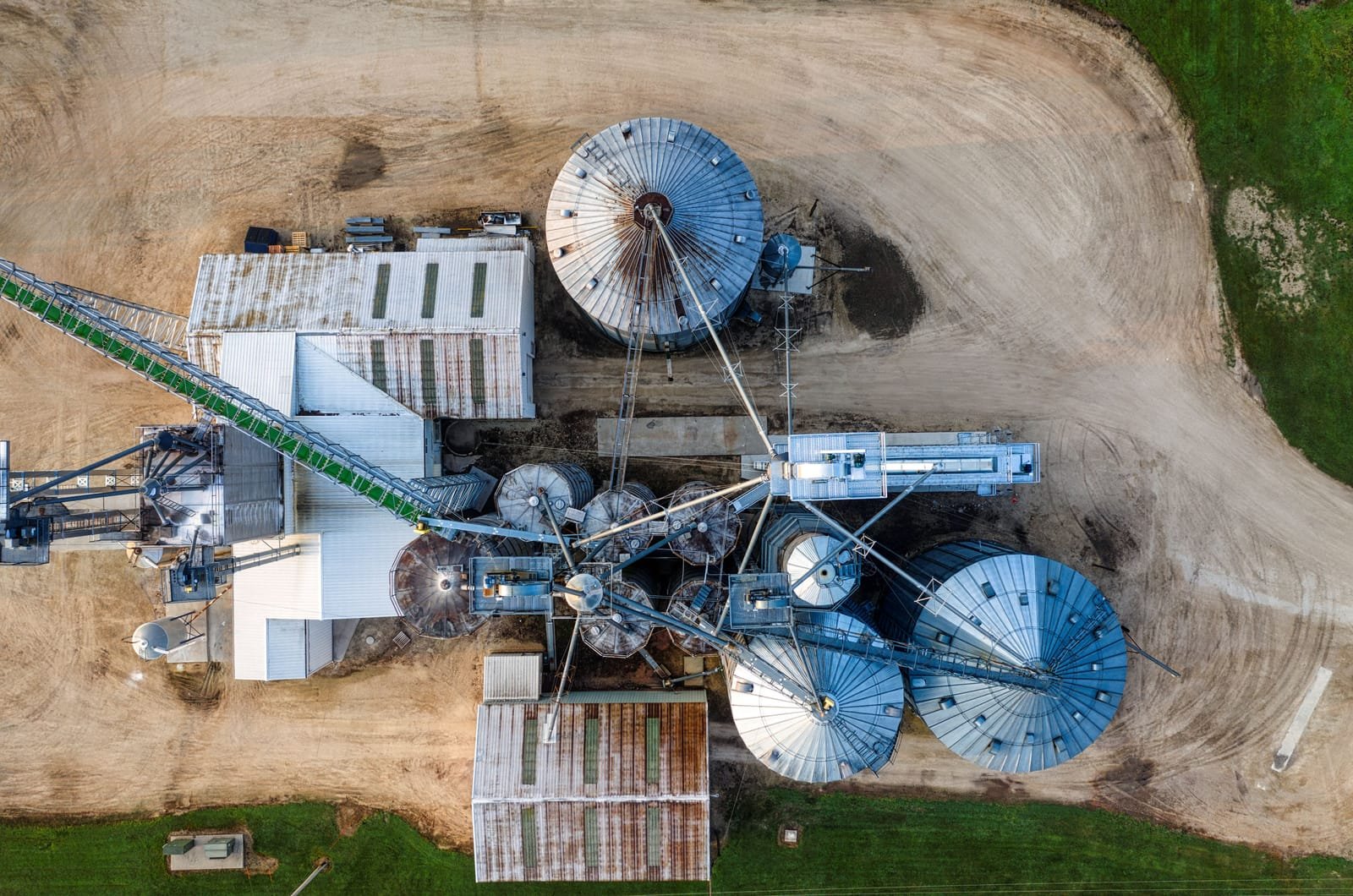 Overhead view of a working grain handling facility: steel storage bins, headhouse, conveyor galleries and truck aprons. Photo: Tom Fisk, via Pexels (Pexels Licence)
OSHA grain handling requirements: what to check this week
1. Decide whether you are in scope, in writing. Feed mills and flour mills are named alongside grain elevators. If you are not sure which standards reach your operation, start from the OSHA standards that apply by industry and work back to the section.
2. Open the emergency action plan and read it against 1910.38. Paragraph (d) does not ask for a grain-specific plan; it asks for a plan that meets the general rule.
3. Check the training file for all three triggers. Annual is the one people remember. Job change and before-first-day for new employees are the two that fail an inspection.
4. Find the last hot work permit and the last entry permit. If neither exists, the test is whether the employer or the authorizing representative was physically present for the whole job. That is the only exception the standard gives you.
5. Walk the priority housekeeping areas with a tape. In grain elevators, paragraph (j)(2)(i) names them: floor areas within 35 feet of inside bucket elevators, floors of enclosed areas with grinding equipment, and floors of enclosed areas with grain dryers inside the facility. Paragraph (j)(2)(ii) requires fugitive grain dust over 1/8 inch at those areas to be removed immediately under the program, unless the program demonstrates equivalent protection.
6. Re-read the bin entry rules before the next one. Equipment that presents a danger is de-energized and locked out or blocked off. The atmosphere is tested for combustible gases, vapors and toxic agents where you have reason to believe they may be present, and for oxygen unless there is continuous natural or forced-air ventilation. Below 19.5% oxygen, above 10% of the lower flammable limit, or above a Subpart Z ceiling value, ventilate first and use a respirator under 1910.134 if ventilation cannot fix it. "Walking down grain" is prohibited outright.
7. Confirm the three things that must be outside the bin. An observer equipped to provide assistance and in visual, voice or signal-line contact; rescue equipment specifically suited to that structure; and an observer trained in rescue procedures, including how to call for more help.
8. Date the maintenance certifications. A record with no name or no equipment identifier is not the record paragraph (m)(3) describes.
Most of this is a program, not a form. Our guide to written safety programs and what they must contain covers the structure that holds the plan, the permits and the records together.
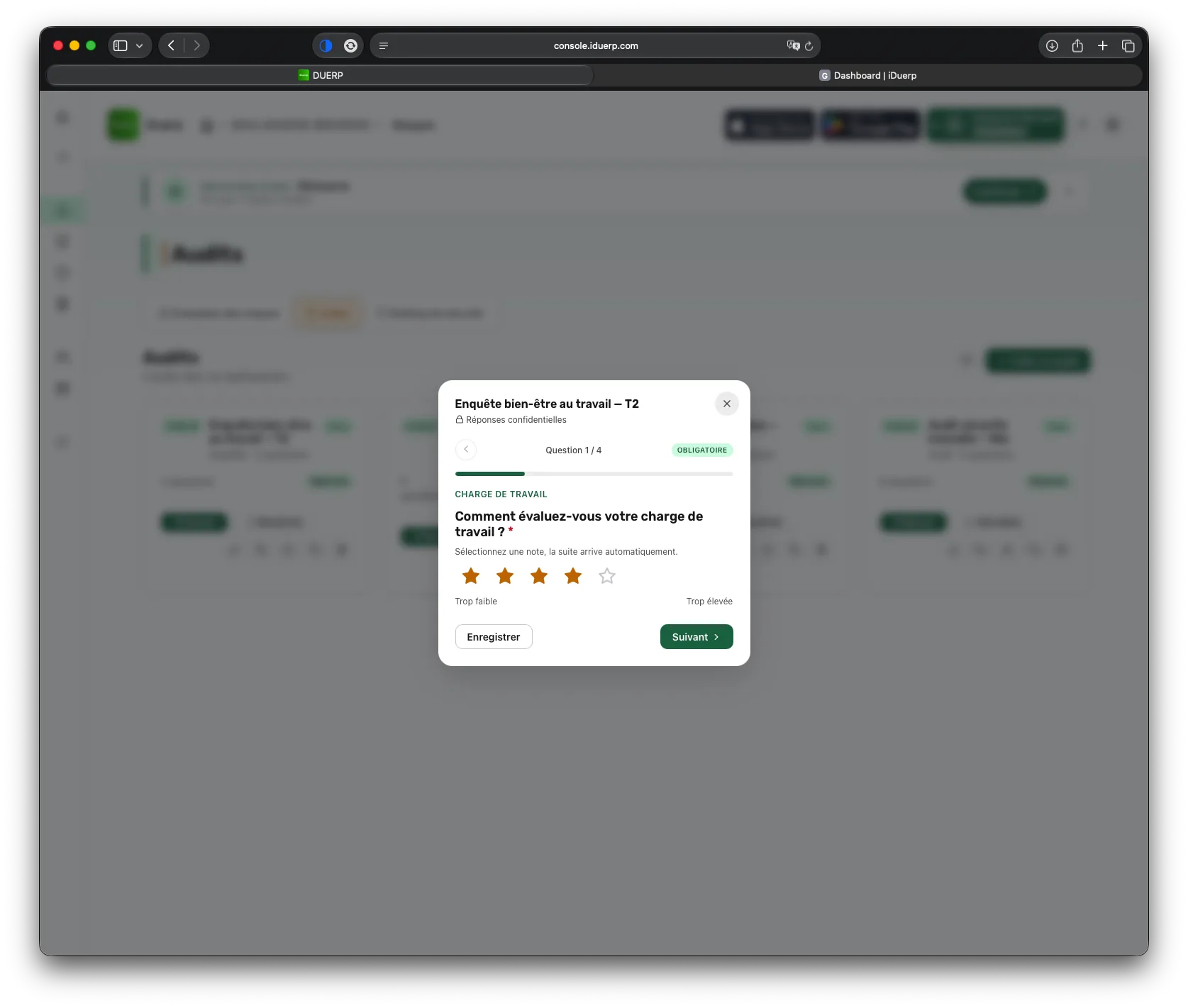 OSHAid console — the audits list, where a preventive-maintenance inspection becomes a dated, named, signed record instead of a note in a logbook
A standard that is mostly proof
Strip 1910.272 down and it is one idea repeated: before the dangerous thing happens, someone writes down that the precautions are in place, and signs it. The permit is not the safety measure — it is the evidence the safety measure was taken.
That is also the difference between a binder you defend and a program you can show. When a compliance officer, a client or an insurer asks how bin entries are controlled at your site, the answer that lands is a dated permit with a name on it, retrieved in seconds, not a description of how it usually goes.
Questions safety officers ask
- Does OSHA require a permit to enter a grain bin?
Yes, under 29 CFR 1910.272(g)(1)(i), unless the employer or the employer's representative who would otherwise authorize the permit is present during the entire operation. The permit certifies that the precautions in paragraph (g) were implemented before entry, and it is kept on file until the entry operations are complete.
- How much grain dust accumulation does OSHA allow?
- Which facilities does 29 CFR 1910.272 apply to?
About this article
Written by the OSHAid Safety Desk from official sources (OSHA news releases, the text of the standards, BLS and NIOSH data), checked against those sources and reviewed before publication. It explains what a rule says; it is not legal advice for your situation. OSHAid
Make the permits and records findable
Create a free OSHAid account, store your written programs, log inspections with dates and names, and keep the records a grain facility has to produce on request. No commitment.
Create my accountFreeDownload on theApp StoreGET IT ONGoogle PlayThe intelligent OSHA companion that automates your field compliance. Mobile app + web console + specialized safety AI agent, built for US workplaces.
🇫🇷 Hosted in EuropeGDPR CompliantProductIndustriesGuides- OSHA compliance software
- Hazard assessment guide
- Safety program templates
- JHA examples
- OSHA requirements
- OSHA recordkeeping
- OSHA standards by industry
- Workplace hazards
- Get started
- What is OSHA?
- Workplace safety glossary
- Why OSHAid?
- Enterprise solutions
- About
- Blog
- Legal notice
© 2026 OSHAid - published by DUOPP (SAS). All rights reserved.