 OSHAidProductsDemosIndustriesPricingMoreClient accessCreate my accountFree🇺🇸ENCreate my accountBack to blogFundamentalsOctober 23, 2026· By the OSHAid Safety Desk
OSHA hydrogen sulfide exposure limit: a ceiling, not an average
Sewer gas is heavier than air, and the smell stops before the danger does. Here is what the standards set, and what has to happen before entry.
The OSHA hydrogen sulfide exposure limit is not an average you can balance out across a shift. In general industry it is a ceiling: 20 parts per million that an employee's exposure may not exceed at any time during an 8-hour shift.
Safety+Health magazine put the gas back in front of safety officers on October 22 with a reminder on working safely around hydrogen sulfide, which collects in basements, manholes, sewers and underground vaults. OSHA's own topic page is blunter. It calls hydrogen sulfide one of the leading causes of workplace gas inhalation deaths in the United States, and cites Bureau of Labor Statistics figures of 46 worker deaths between 2011 and 2017.
What makes it deadly is not only the toxicity. The gas is heavier than air, so it pools exactly where people climb down. And after a while at low concentrations, or almost at once at high ones, you stop being able to smell it at all.
What the OSHA hydrogen sulfide exposure limit actually is
General industry: a ceiling, plus one short peak. Hydrogen sulfide sits in Table Z-2 of 29 CFR 1910.1000, OSHA's air contaminants standard. Its row carries no 8-hour time-weighted average. It gives an acceptable ceiling concentration of 20 ppm and an acceptable maximum peak above that ceiling of 50 ppm, allowed for 10 minutes, once, and only if no other measurable exposure occurs during the shift. Paragraph (b)(2) is what makes a ceiling a ceiling: exposure may not exceed it at any time during the shift, except inside that one peak window. The text was read against Title 29 as it stood on October 21, 2026.
Construction and shipyards: 10 ppm as an 8-hour average. Table 1 to 29 CFR 1926.55 lists hydrogen sulfide at 10 ppm, or 15 mg/m3. The figure is not preceded by a (C), so paragraph (a)(2) makes it an 8-hour time-weighted average from breathing-zone samples. OSHA's topic page shows the same 10 ppm 8-hour limit for shipyards.
NIOSH recommends less. On OSHA's hydrogen sulfide hazards page, the NIOSH recommended exposure limit is a 10-minute ceiling of 10 ppm, and the NIOSH IDLH value — immediately dangerous to life or health — is 100 ppm.
What those numbers do to a person. OSHA's table of short-term effects runs from an odor threshold of roughly 0.01 to 1.5 ppm, through fatigue, headache and dizziness around 20 ppm, to loss of smell between 100 and 150 ppm, and rapid unconsciousness within one or two breaths at 700 to 1,000 ppm.
Which is why a nose is not a detector. OSHA's guidance puts it in capitals: do not rely on your sense of smell to indicate the continuing presence of hydrogen sulfide or to warn of harmful levels. Above 30 ppm the odor is described as sweet rather than rotten, and at high concentrations the ability to smell it can be lost instantly.
It also burns. OSHA gives the explosive range in air as 4.3 to 45 percent, far above the exposure limit, which is why ventilation gear for these spaces carries its own requirements. The sources are unglamorous: decaying organic matter, sewage sludge, liquid manure, well water, and processes from petroleum refining and wastewater treatment to pulp and paper, food processing and mining. If any of that describes your operation, the gas belongs by name in your inventory of workplace hazards.
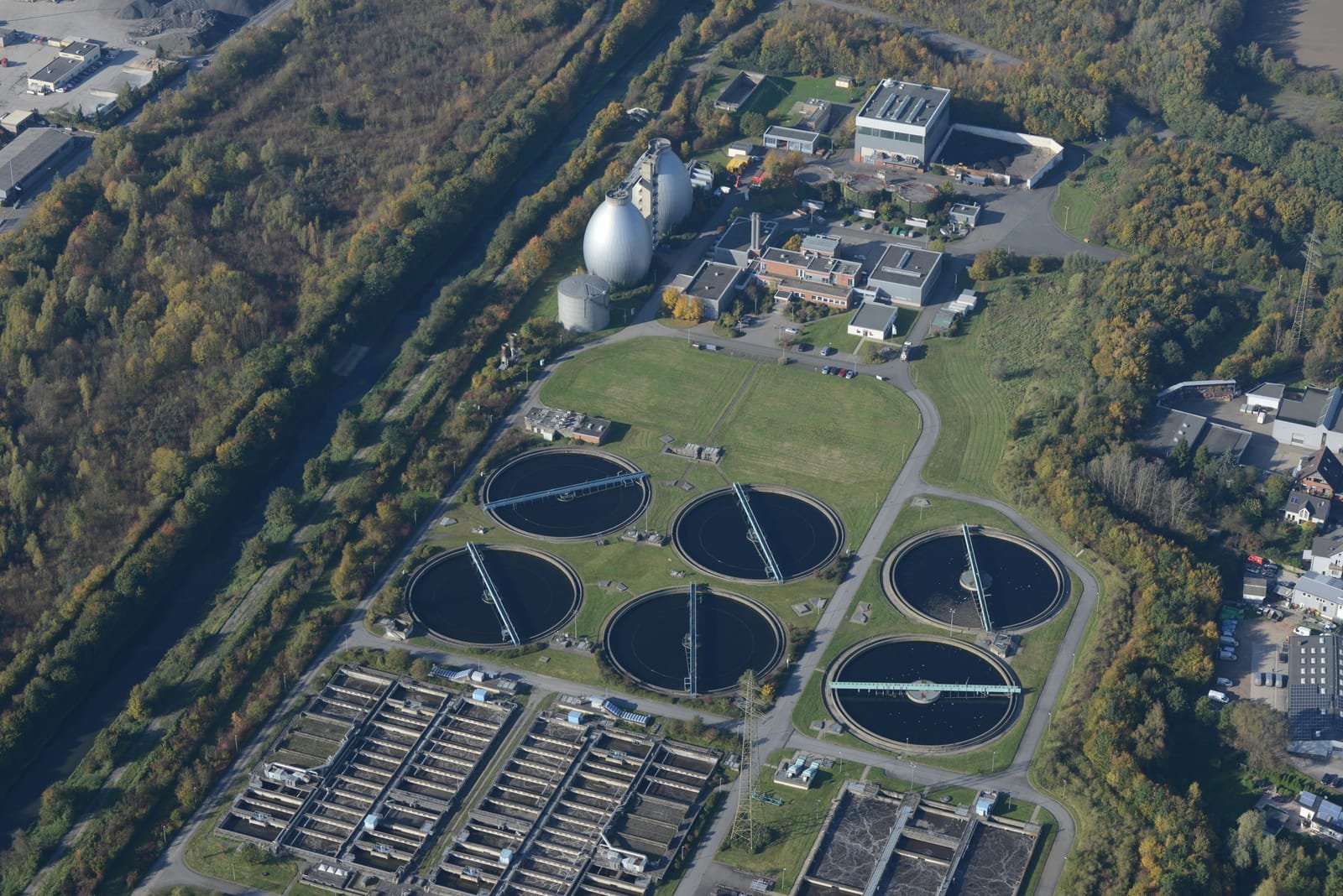 Aerial view of a municipal wastewater treatment plant: circular settling tanks, rows of aeration basins and two egg-shaped sludge digesters. Photo: Hicham Oukachi, via Pexels
What has to happen before anyone opens the hatch
1. Name the processes that can produce or release it. OSHA asks employers to identify known sources and evaluate the fire and explosion hazard with a process or job hazard analysis. Our job hazard analysis examples show the detail that holds up: the step, the hazard, the control, the person responsible.
2. Decide, in writing, whether the space is a permit-required confined space. 29 CFR 1910.146 requires the employer to evaluate the workplace to determine if any spaces are permit spaces. Its definition of a hazardous atmosphere covers any substance with a published permissible exposure limit that could be present above that limit, any condition immediately dangerous to life or health, and a flammable gas above 10 percent of its lower flammable limit. Hydrogen sulfide can produce all three. Where permit spaces exist, the standard requires danger signs or another equally effective warning.
3. Test the air from outside, before entry. OSHA's control guidance is a sequence: test the air from the outside, test it continuously during the work, determine whether an entry permit is required, ventilate continuously, have rescue procedures, personnel and equipment ready, and keep contact with a trained attendant. A qualified person does the testing, with equipment that detects the gas.
4. Ventilate with the right equipment. OSHA specifies that the exhaust and ventilation system be non-sparking, grounded, corrosion-resistant, separate from other exhaust systems and explosion-proof, and that in a confined space it run continuously while work goes on inside.
5. Match respiratory protection to the concentration. Below 100 ppm, OSHA's guidance calls for an air-purifying respirator with canisters or cartridges specific to hydrogen sulfide; at or above 100 ppm, a full-face pressure-demand SCBA with a service life of at least 30 minutes, or a combination supplied-air respirator with an auxiliary self-contained supply. Whenever respirators are used, 29 CFR 1910.134 requires a respiratory protection program covering selection, fit testing, medical evaluation and training.
6. Write the rescue plan before the first entry. OSHA's case summaries include an underground lift station at a landfill where one worker entered to replace a sump pump and three more died trying to reach him. No permit entry system had been established. Rescuers need positive-pressure SCBA and a safety line for rapid exit, trained before the day it matters.
7. Train the people who go in. OSHA lists the topics itself: the sources and health hazards of the gas, the symptoms of exposure, detection methods and the applicable exposure limits, the work practices that protect against it, the emergency plan, rescue techniques and first aid, and confined space procedures.
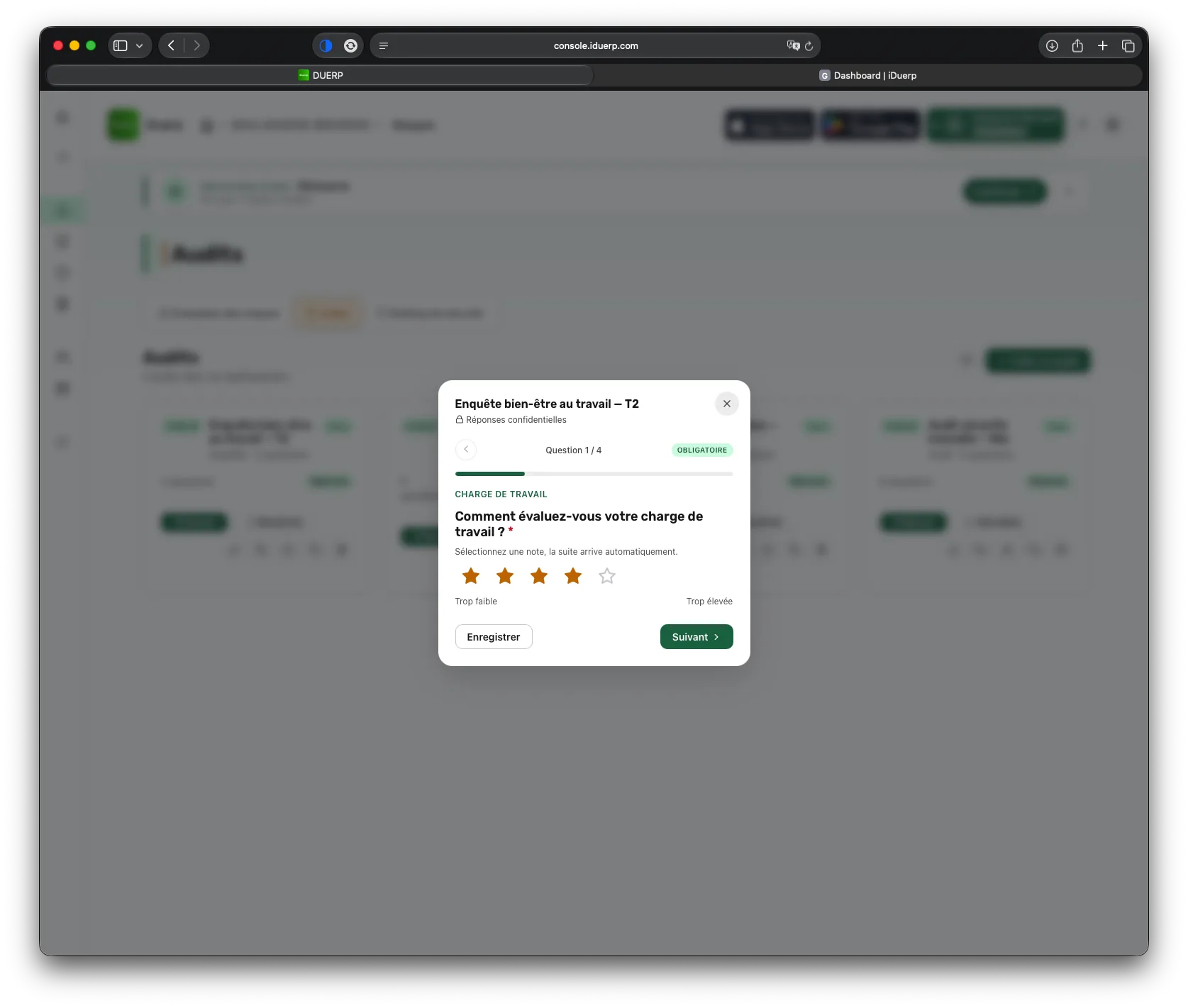 OSHAid console — audits list, where the checks on a confined space are scheduled, assigned and closed with their findings
The proof is the record, not the memory
Every step above leaves a trace, or it should: the analysis that named the space, the meter and its calibration, the readings taken before and during the work, the permit, the training dates, the rescue plan. In most companies those sit in four places and nobody can assemble them quickly.
That gap is what turns a sound practice into a weak defense. A safety officer who can show on one screen that the air was tested before each entry, and by whom, has something better than a procedure in a binder. OSHAid keeps hazards, job hazard analyses, corrective actions and the documents behind them in one place, so what your crew already does is work you can show.
Questions safety officers ask
- What is the OSHA permissible exposure limit for hydrogen sulfide?
In general industry, Table Z-2 of 29 CFR 1910.1000 sets an acceptable ceiling concentration of 20 ppm, with a peak of 50 ppm allowed for up to 10 minutes once in a shift and only if no other measurable exposure occurs. Construction uses 10 ppm as an 8-hour average, under Table 1 to 1926.55.
- Can workers rely on the rotten egg smell to detect hydrogen sulfide?
- Is a sewer manhole a permit-required confined space?
About this article
Written by the OSHAid Safety Desk from official sources (OSHA news releases, the text of the standards, BLS and NIOSH data), checked against those sources and reviewed before publication. It explains what a rule says; it is not legal advice for your situation. OSHAid
Put your confined spaces on one list
Create a free OSHAid account, add the spaces where gas can collect, and keep the hazard analysis, the controls and the records together. No commitment.
Create my accountFreeDownload on theApp StoreGET IT ONGoogle PlayThe intelligent OSHA companion that automates your field compliance. Mobile app + web console + specialized safety AI agent, built for US workplaces.
🇫🇷 Hosted in EuropeGDPR CompliantProductIndustriesGuides- OSHA compliance software
- Hazard assessment guide
- Safety program templates
- JHA examples
- OSHA requirements
- OSHA recordkeeping
- OSHA standards by industry
- Workplace hazards
- Get started
- What is OSHA?
- Workplace safety glossary
- Why OSHAid?
- Enterprise solutions
- About
- Blog
- Legal notice
© 2026 OSHAid - published by DUOPP (SAS). All rights reserved.