 OSHAidProductsDemosIndustriesPricingMoreClient accessCreate my accountFree🇺🇸ENCreate my accountBack to blogEnforcementOctober 25, 2026· By the OSHAid Safety Desk
OSHA national emphasis program: how an industry gets targeted
OSHA proposed $380,664 against an Illinois utility contractor on October 21 after investigators saw an unprotected trench. No complaint started that inspection — a program did.
An OSHA national emphasis program is the agency saying in advance, in writing, where its inspectors will be looking.
On October 21, 2026, the Department of Labor cited a Frankfort, Illinois utility construction company $380,664 in proposed penalties after federal investigators saw employees working in an unprotected trench deeper than 8 feet. Three of the four violations were classified repeat.
No complaint started that inspection. OSHA's release says the agency opened it as part of its National Emphasis Program on Trenching: an inspector saw an open trench and walked onto the site.
Twelve national emphasis programs are active today. Each one names a hazard or a list of industry codes, and each one changes the odds that an inspector arrives at your door with no incident and no complaint behind them.
What an OSHA national emphasis program is, and how it reaches you
The definition is OSHA's own. National emphasis programs are "temporary programs that focus OSHA's resources on particular hazards and high-hazard industries". The agency says it builds and evaluates them from inspection data, injury and illness data, NIOSH reports, peer-reviewed literature and analysis of its own inspection findings. Each program is a numbered directive published on OSHA's national emphasis program page, with an effective date.
Twelve were listed there on October 25, 2026: combustible dust, falls, amputations in manufacturing, outdoor and indoor heat, hexavalent chromium, lead, primary metal industries, process safety management, shipbreaking, respirable crystalline silica, trenching and excavation, and warehousing and distribution center operations. The heat program, CPL 03-00-024, took effect on April 10, 2026 and covers general industry, construction, maritime and agriculture.
They reach you in one of two ways. The first is being seen. The trenching directive, CPL-02-00-161, effective October 1, 2018, tells compliance officers to open an inspection "whenever they observe an open trench or an open excavation, regardless of whether or not a violation is readily observed" — during normal travel between jobs, during any other inspection, or on a referral from a city inspector. That is the mechanism behind the Illinois citations.
The second is a list with your establishment on it. Under the warehousing program, CPL-03-00-026, effective July 31, 2026, OSHA's Office of Statistical Analysis generates a master list of establishments in the covered NAICS codes for each area office, assigns each one a random number and sorts the list by it. Area offices then work that list, whole or in cycles, until the program is cancelled. Nothing about your own safety record puts you on it; your industry code does. Establishments already inspected comprehensively for those hazards in the previous three years come off it.
The scope is usually wider than the title suggests. The warehousing program covers general, refrigerated and farm-product warehousing, couriers and express delivery, local messengers and local delivery, and postal processing and distribution centers. Every inspection under it is a comprehensive safety inspection, looking at powered industrial vehicles, material handling and storage, walking-working surfaces, means of egress, heat, ergonomics and fire protection.
Regions and area offices run their own. Regional and local emphasis programs cover hazards that matter in one part of the country. The Chicago region — Illinois, Indiana, Michigan, Minnesota, Ohio and Wisconsin — currently lists programs on grain handling, food manufacturing, powered industrial vehicles, building renovation and demolition, high-rise construction, wood pallet manufacturing and workplace noise. Which rulebook applies to your operation in the first place is a separate question: start with OSHA standards by industry.
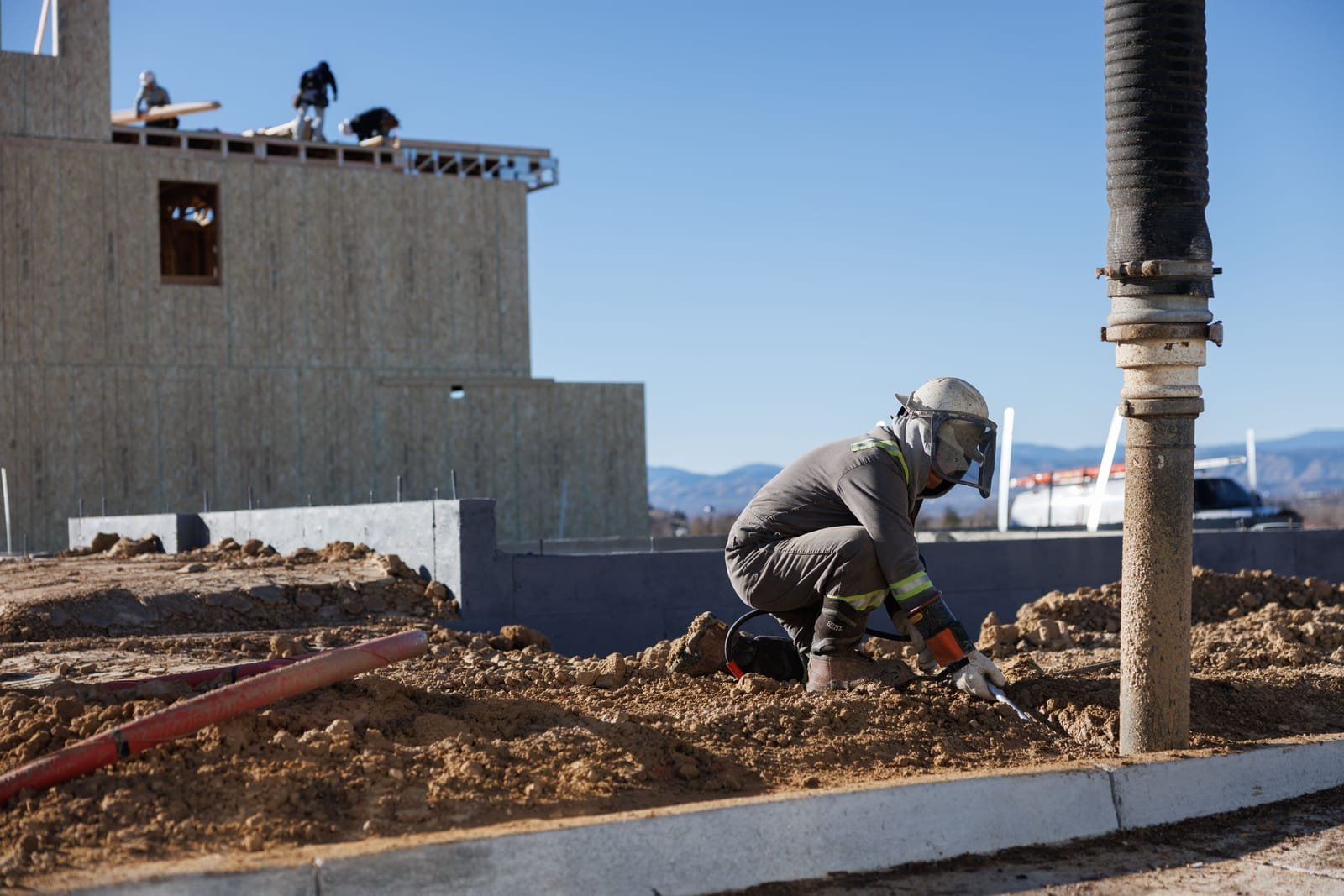 A construction worker in a hard hat and face shield kneels in the dirt beside a concrete line while a framing crew works on the roof deck behind. Photo: Rachel Tolander, via Pexels
What to check this week
1. Find your NAICS code, then read the list. The national emphasis program page names every active program and links its directive. Warehousing and parcel operations, manufacturing with amputation hazards, metal plants, covered chemical facilities, anyone cutting or grinding silica-bearing material, anyone opening a trench: check whether your code or your hazard is there.
2. Open the directive itself, not the summary. It is written for the inspector, which makes it the closest thing to an inspection checklist you will get for free. The warehousing directive names the seven hazard families its inspectors arrive already looking for.
3. Check your region as well as the country. The local and regional emphasis program listing is sorted by region and area office, and it reaches industries no national program names — seafood processing in New England, transportation tank cleaning in the Midwest, tree and landscaping work in several regions.
4. Pull your injury records for this year and the three before it. At a warehousing opening conference the inspector verifies your NAICS code and your total number of employees, then reviews the OSHA 300 logs, 300A summaries and 301 incident reports for the current and previous three calendar years. If electronic submission applied to you and you did not file, the directive tells the inspector to cite that as well. Our OSHA recordkeeping guide sets out who keeps which form.
5. Walk the site against the hazards the program names, not against your own habits. A programmed inspection under an emphasis program is comprehensive: the inspector is not confined to one machine or one complaint. The duties that apply whether or not anyone inspects you are in our guide to OSHA requirements.
6. Close out old citations properly. Three of the four Illinois citations were classified repeat. OSHA's penalty table caps a serious violation at $16,550 and a willful or repeated one at $165,514 per violation, for violations assessed after January 15, 2026.
7. Know what the inspector must check before starting. Under the warehousing program the inspector must not proceed if your NAICS code is not on the program's table, or if your establishment already had a comprehensive inspection of those hazards within three years. Which program an inspection is opened under is a fair question at the opening conference.
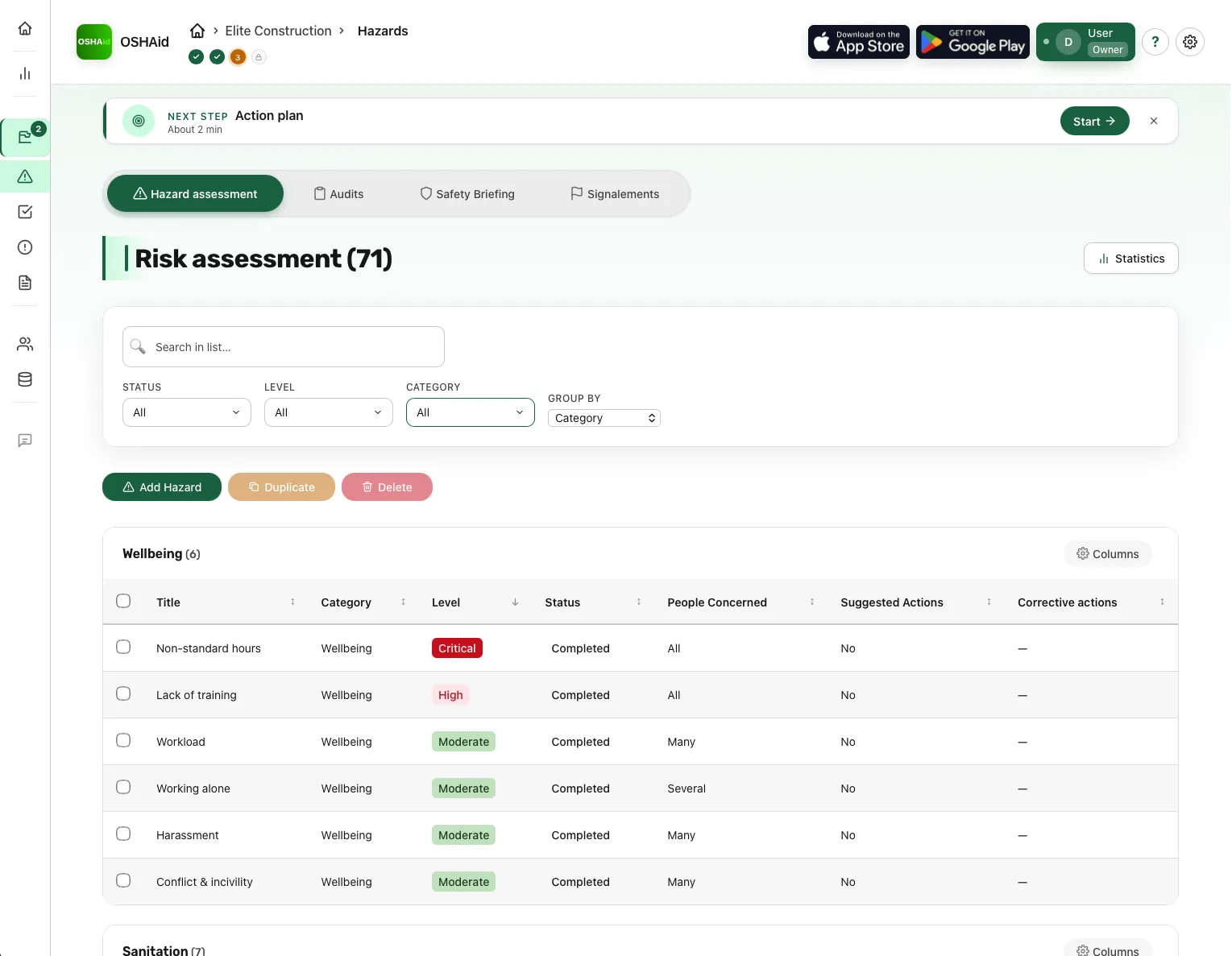 OSHAid console — hazard list, where the hazards an emphasis program targets sit beside the controls and the evidence for each one
The program is published; your side of it should be too
An emphasis program is public. The directive, the hazards, the industry codes, the procedures the inspector follows: all of it is published before anyone knocks. What is not public is your half — whether the hazard assessment happened, whether the corrective action closed, whether the training was recorded, whether the 300 log matches what people remember.
That is the half a safety officer should be able to show in an afternoon: to an inspector, but also to a client asking for proof, or to a leadership team asking what the safety program bought. OSHAid keeps hazards, job hazard analyses, corrective actions, incidents and documents in one place, so the answer to "show me" is a screen instead of a search.
Questions safety officers ask
- What is an OSHA national emphasis program?
OSHA describes national emphasis programs as temporary programs that focus its resources on particular hazards and high-hazard industries. Each one is published as a numbered directive with an effective date and sets the procedures inspectors follow. Twelve were listed on OSHA's emphasis program page in October 2026.
- How do I know if a national emphasis program applies to my business?
- Does an emphasis program mean my business will be inspected?
About this article
Written by the OSHAid Safety Desk from official sources (OSHA news releases, the text of the standards, BLS and NIOSH data), checked against those sources and reviewed before publication. It explains what a rule says; it is not legal advice for your situation. OSHAid
Be ready before the list reaches you
Create a free OSHAid account, map the hazards an emphasis program would come looking for, and keep the assessments, actions and records in one place. No commitment.
Create my accountFreeDownload on theApp StoreGET IT ONGoogle PlayThe intelligent OSHA companion that automates your field compliance. Mobile app + web console + specialized safety AI agent, built for US workplaces.
🇫🇷 Hosted in EuropeGDPR CompliantProductIndustriesGuides- OSHA compliance software
- Hazard assessment guide
- Safety program templates
- JHA examples
- OSHA requirements
- OSHA recordkeeping
- OSHA standards by industry
- Workplace hazards
- Get started
- What is OSHA?
- Workplace safety glossary
- Why OSHAid?
- Enterprise solutions
- About
- Blog
- Legal notice
© 2026 OSHAid - published by DUOPP (SAS). All rights reserved.