 OSHAidProductsDemosIndustriesPricingMoreClient accessTry OSHAidFree🇺🇸ENTry OSHAidBack to blogDraft ruleOctober 1, 2026· By the OSHAid Safety Desk
Hospital weapons screening: what Cal/OSHA's draft would require
A discussion draft would add weapons detection to California's health care violence standard. Written comments close October 12, 2026.
Hospital weapons screening is moving from hospital policy to California regulation. On September 14, 2026, Cal/OSHA posted a discussion draft amending Title 8, Section 3342, the Violence Prevention in Health Care standard, and asked for written comments by October 12, 2026.
The draft carries out Assembly Bill 2975, which gives the Occupational Safety and Health Standards Board until March 1, 2027 to amend the standard and directs that hospitals get a compliance date no longer than 90 days after adoption.
If you own safety at a California hospital, this is the window in which the text can still change. If your hospital is anywhere else, read it as the clearest statement yet of what a regulator thinks screening at the door should look like.
What the hospital weapons screening draft would require
The new subsection would apply to general acute care hospitals, acute psychiatric hospitals and special hospitals. The ambulance entrance is excepted. Everything else turns on one definition: an unrestricted entrance is an entrance that is open to any individual without locks or access-control systems.
That definition is the news. AB 2975 names three doors: the main public entrance, the emergency department entrance and the labor and delivery entrance if separately accessible to the public. The draft asks for screening at all unrestricted entrances, "including but not limited to" those three. For a hospital with a side lobby or an outpatient door nobody badges through, that is a larger project than the statute suggested.
The written policy would have to use devices that automatically screen a person's body and their personal items. The draft lists walk-through metal detectors, handheld wands, X-ray systems, computed tomography, millimeter-wave systems, artificial intelligence-assisted weapons detection and magnetic anomaly detection. Handheld wands could not be the sole equipment, with three exceptions: small and rural hospitals, entrances where larger equipment would breach Title 24 spacing rules, and hospitals that exclusively provide extended care, such as certified long-term care hospitals and inpatient rehabilitation facilities.
Screening would be staffed by assigned personnel other than a health care provider, at every covered entrance, at all times it is open to the public. Those personnel would need at least eight hours of initial training, a refresher at least annually, and more training whenever equipment, work practices or newly recognized hazards change. The curriculum is long: concealment methods and detection limits, behavioral threat indicators, improvised weapons, daily function checks and alarm resolution, safe searching of persons and bags, section 5193 procedures if sharps or biological hazards turn up, de-escalation, personal safety, implicit bias and disability awareness, and hands-on practical exercises.
Three provisions shape what the public sees. Someone who triggers a device may leave with the object and return without it, and cannot be refused entry solely for having had it. The policy needs protocols for people who decline screening. And a highly visible notice near each screened entrance would have to state that the hospital screens for weapons but that no one is refused medical care under EMTALA. Employees and providers wearing a badge with photo, name and title may be excluded.
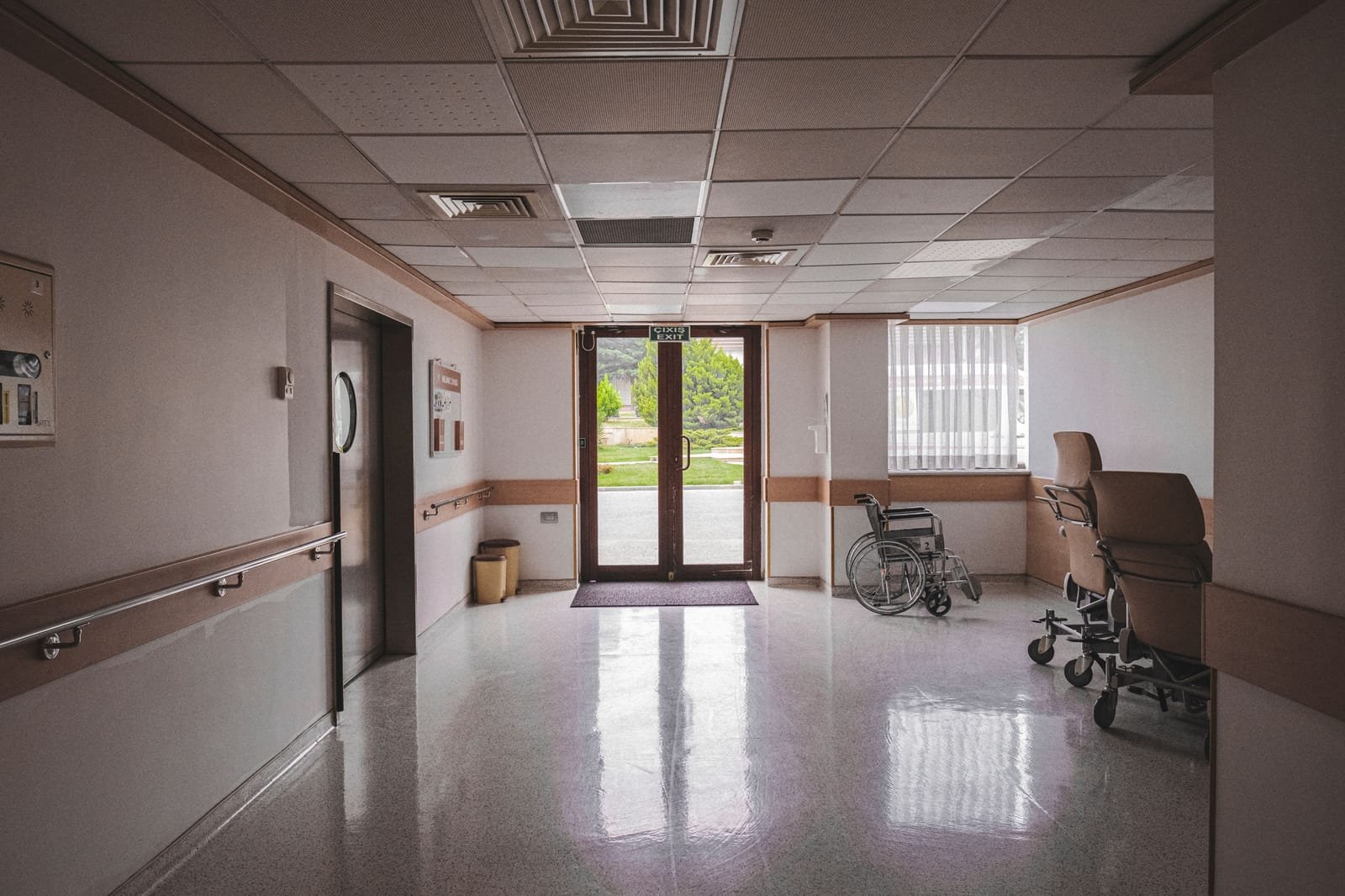 A hospital entrance vestibule with glass doors and wheelchairs waiting beside them, the kind of door the draft would cover. Photo: Zakir Rushanly, via Pexels
What to check before comments close
1. Count your unrestricted entrances. Walk the perimeter and list every door the public can open without a lock or a card reader. That list, not the statute's three doors, is what the draft would measure you against.
2. Write in by October 12. Cal/OSHA takes comments at RS@dir.ca.gov. Spacing limits, long-term-care status and rural designation are exactly the facts a regulator cannot know about your building unless you put them in writing.
3. Check the plan you already owe. Section 3342 has been in force since April 1, 2017 and already requires a written workplace violence prevention plan inside your Injury and Illness Prevention Program, specific to each unit's hazards and available to employees at all times. Screening would bolt onto that plan, not replace it. If yours has drifted, a written program you can actually produce is the prerequisite for everything below.
4. Pull the Violent Incident Log. The standard requires a log of every incident with the date, time, specific location and department, a detailed description, a classification of who committed the violence and of the circumstances. It has to be reviewed at the annual plan review. Those entries are your evidence for which doors screening would actually change.
5. Re-read the reporting clocks. Hospitals must report to the Division within 24 hours when an incident causes injury, involves a firearm or other dangerous weapon, or presents an urgent or emergent threat to personnel; all other incidents within 72 hours. Violent incident records are kept five years, training records at least one year.
6. Budget the hours, not just the hardware. Eight hours per screener plus an annual refresher is the line item most buildings underestimate. Count heads per entrance per shift before you count detectors.
7. Outside California, treat it as a benchmark. OSHA states there are currently no specific OSHA standards for workplace violence, and inspects under the General Duty Clause using directive CPL 02-01-058 and its guidelines for healthcare and social service workers. The hazard is not California's: OSHA reports that of 5,283 fatal work injuries in the United States in 2023, 740 were due to violent acts. Healthcare employers in any state can read this draft as a maturity model.
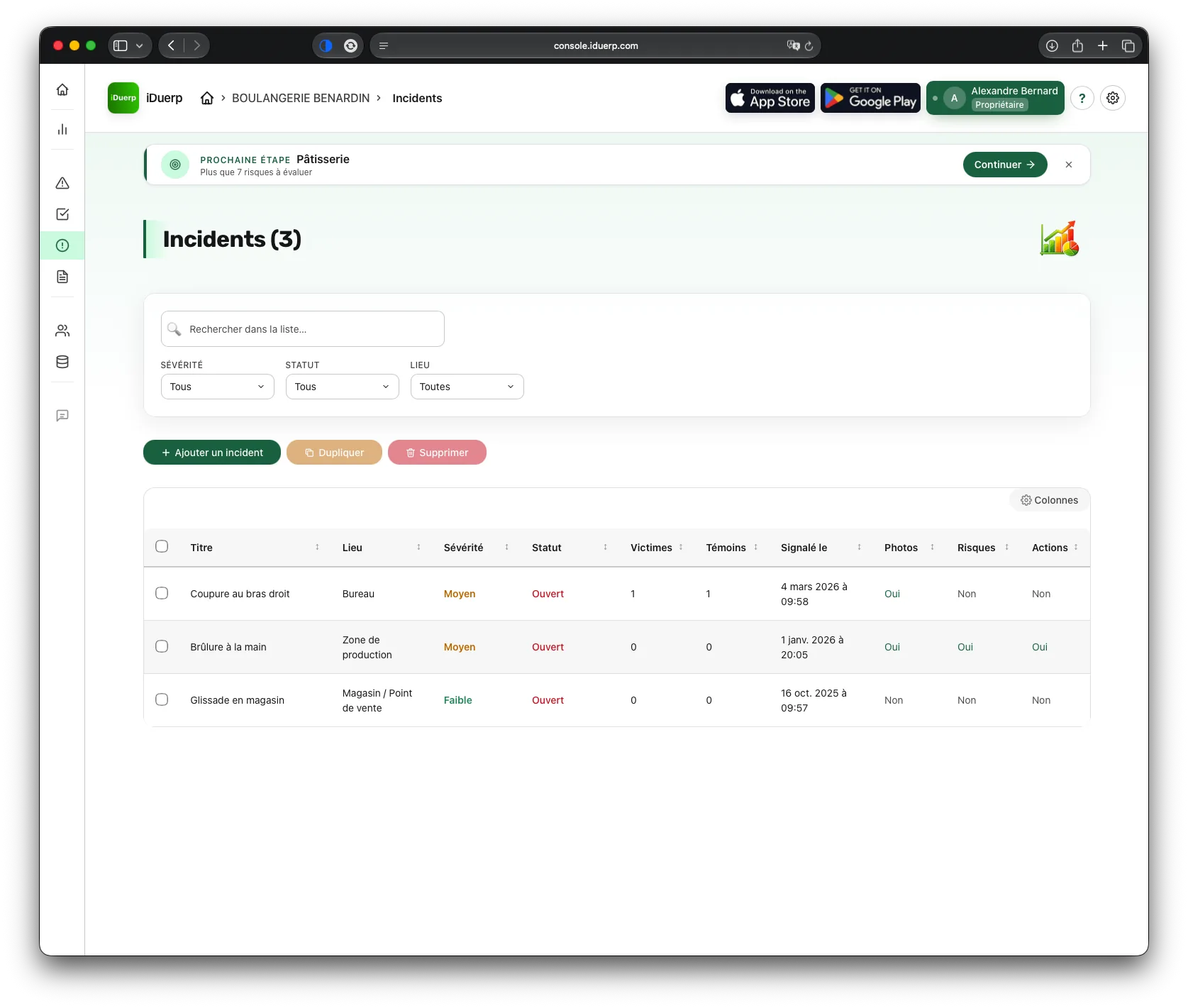 OSHAid console — the incident log, where violent incidents and their circumstances are recorded
A door policy you can show
Screening equipment is the visible half of this draft. The half that gets audited is paper: a written policy, a training record per screener with dates and topics, an incident log with no missing fields, and a reporting clock someone can prove was met. A hospital keeping those across a shared drive, a binder in security and three inboxes will spend the 90 days after adoption assembling them. One that keeps them in a single place spends those days installing hardware and training people. That is the argument for a safety program you show rather than defend, and it holds long before any rule is final.
Questions safety officers ask
- When would California's hospital weapons screening rule take effect?
No date is set yet. AB 2975 requires the Occupational Safety and Health Standards Board to amend the standard by March 1, 2027, and requires a compliance date no longer than 90 days after adoption. What Cal/OSHA posted on September 14, 2026 is a discussion draft, with comments due October 12, 2026.
- Which hospital entrances would need weapons detection?
- Does federal OSHA have a workplace violence standard?
Related reading
All posts- Nov 20, 2026Rubber insulating glove testing requirements: the six-month clockOSHA update
- Nov 8, 2026Bloodborne pathogens PPE requirements: what a wiped gown no longer doesResearch
- Oct 2, 2026Refusing unsafe work: when a stand-down is protectedWhistleblower
- Sep 30, 2026Responding to an OSHA complaint: the five working days that followInspections
About this article
Written by the OSHAid Safety Desk from official sources (OSHA news releases, the text of the standards, BLS and NIOSH data), checked against those sources and reviewed before publication. It explains what a rule says; it is not legal advice for your situation. OSHAid
Make your violence prevention plan easy to show
Create a free OSHAid account and keep your hazards, training records, incidents and documents in one place. No commitment.
Try OSHAidFreeDownload on theApp StoreGET IT ONGoogle PlayThe intelligent OSHA companion that automates your field compliance. Mobile app + web console + specialized safety AI agent, built for US workplaces.
ProductIndustriesGuides- OSHA compliance software
- Hazard assessment guide
- Safety program templates
- JHA examples
- OSHA requirements
- OSHA recordkeeping
- OSHA standards by industry
- Workplace hazards
- Get started
- What is OSHA?
- Workplace safety glossary
- Why OSHAid?
- Enterprise solutions
- About
- Blog
- Legal notice
© 2026 OSHAid - published by DUOPP (SAS). All rights reserved.
Help us improve OSHAid
We only measure site traffic. No advertising, no resale of data.
OKDeclineLearn more