 OSHAidProductsDemosIndustriesPricingMoreClient accessTry OSHAidFree🇺🇸ENTry OSHAidBack to blogInspectionsNovember 12, 2026· By the OSHAid Safety Desk
OSHA warehouse inspection: what the emphasis program targets
A national emphasis program has put warehouses, distribution centers, postal processing centers and parcel depots on a randomized targeting list in every OSHA area office since July 31, 2026. OSHA is running free warehouse safety training on November 17.
An OSHA warehouse inspection is rarely bad luck. Since July 31, 2026 a national emphasis program has placed warehouses, distribution centers, mail processing centers and parcel delivery operations on a randomized targeting list held by every OSHA area office, and it runs for five years from that date.
OSHA put the subject back on the calendar this month. Its QuickTakes of November 2, 2026 announced a free Passport to Safety and Health webinar on warehouse safety for November 17, and NIOSH's November eNews carried the same notice.
The webinar is one afternoon. The emphasis program behind it decides who gets a visit, what the compliance officer opens first, and which years of your records come out of the drawer.
What an OSHA warehouse inspection covers
The program was rewritten this summer. CPL-03-00-026, the National Emphasis Program on Warehousing and Distribution Center Operations, was signed on July 6, 2026 and took effect on July 31, 2026. It supersedes the 2023 version and expires five years from the effective date.
Every inspection under it is comprehensive. The directive provides that all inspections under this NEP are comprehensive safety inspections, focused on hazards common to these industries including, but not limited to, powered industrial vehicle operations, material handling and storage, walking-working surfaces, means of egress, heat, ergonomics and fire protection.
Coverage follows the NAICS code, not the sign on the building. Table 2 lists seven: 491110 Postal Service (processing and distribution centers only), 492110 Couriers and Express Delivery Services, 492210 Local Messengers and Local Delivery, and 493110, 493120, 493130 and 493190 — general, refrigerated, farm product and other warehousing and storage. A compliance officer may only inspect under the NEP if the establishment's code appears in that table, and the program does not reach delivery to residences and businesses.
Two things dropped out of the 2026 version. The directive's list of significant changes removes coverage for high injury rate retail establishments, which were Table 3 of the 2023 program, and removes the mandatory screening for ergonomic and heat hazards. Both remain focus hazards; what is gone is the required screen.
Selection is random, not reputational. OSHA's Office of Statistical Analysis uses an application called ListGen to build a Master List of establishments in those NAICS codes for each area office, gives every establishment a random number and sorts the list by it. An establishment is deleted if it is out of business, is not actually in a covered industry, or already had a comprehensive inspection on these hazards within the previous three years.
The opening conference starts in the filing cabinet. Before the walkaround, the compliance officer verifies the establishment's NAICS code and the employer's total number of employees, confirms where the warehousing or distribution work happens, and reviews the OSHA 300 logs, 300A summaries and 301 incident reports for the current and previous three calendar years.
Why these industries. The directive reports more than 1,700 violations and approximately 37,410 workers removed from hazards in the first 18 months of the 2023 program. Its Table 1, calculated from Bureau of Labor Statistics data for 2020 through 2024, puts the five-year average rate of days away, restricted or transferred at 1.6 for all private industry, against 4.4 for general warehousing and storage and 6.9 for couriers and express delivery services.
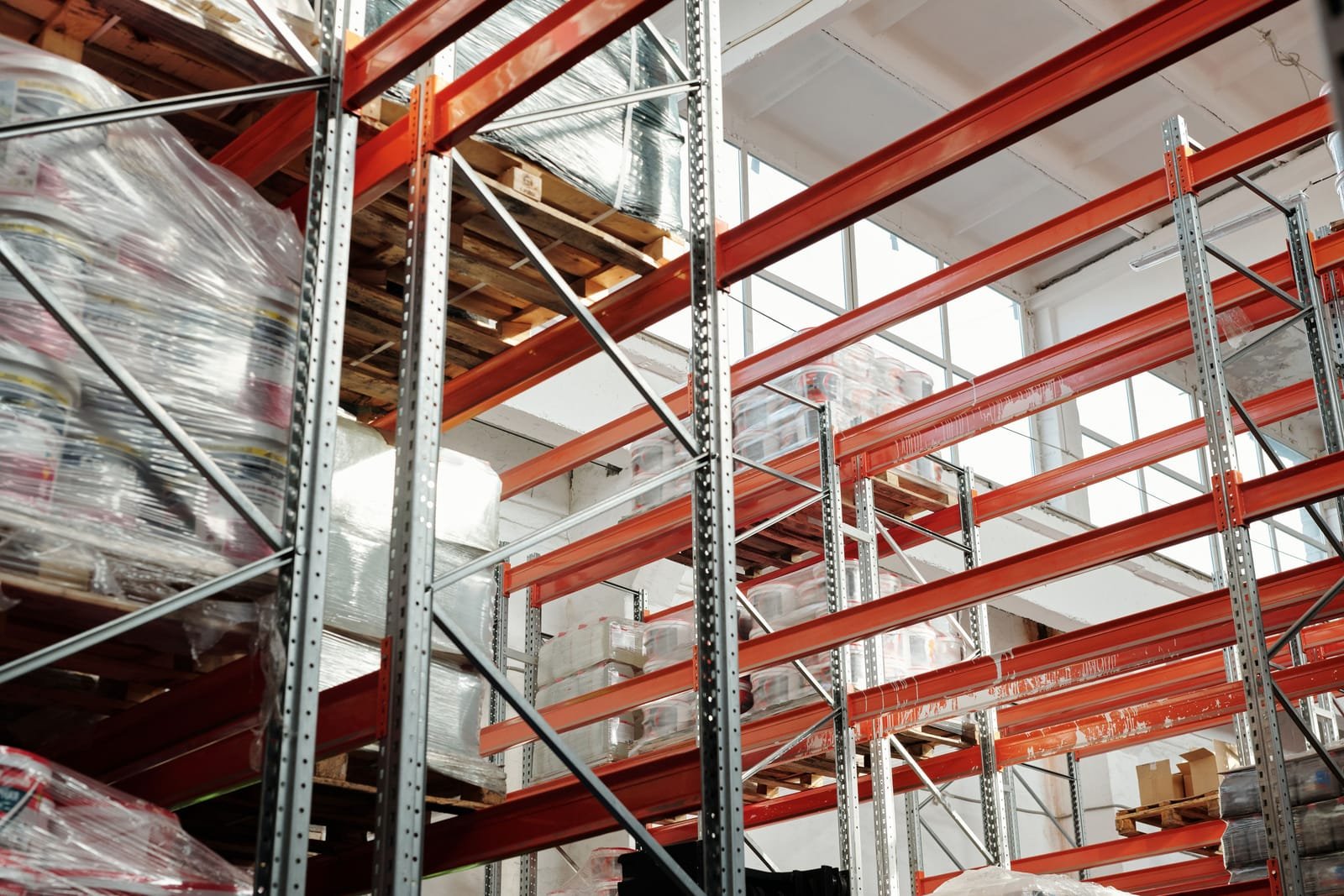 Pallet racking in a warehouse carrying shrink-wrapped loads stacked in tiers on wooden pallets, the storage a compliance officer checks against 29 CFR 1910.176(b). Photo: Tiger Lily, via Pexels (Pexels License)
Seven checks before a compliance officer reaches the floor
1. Confirm the NAICS code you report. The whole program turns on it: if your establishment is classified 493110 or 492110, you are already on a Master List in your area office.
2. Read four years of logs the way a compliance officer will. The opening conference covers the current and previous three calendar years of the 300, 300A and 301. Sort those entries by the seven hazards the NEP names and you have reconstructed the walkaround route. Our guide to OSHA injury and illness recordkeeping sets out which forms you keep and for how long.
3. Check that your electronic submission actually went through. The directive instructs compliance officers that where an employer failed to submit records through the Injury Tracking Application, they must follow OSHA's April 16, 2024 enforcement memorandum and cite the employer. Under 29 CFR 1904.41, an establishment with 20 to 249 employees in an appendix A industry submits its 300A, and one with 100 or more employees in an appendix B industry submits its 300 and 301, by March 2 of the year after the year covered. NAICS 4931, 4921 and 4911 sit in both appendices; 4922 Local Messengers and Local Delivery sits in appendix A.
4. Walk the aisles with 1910.176 open. Paragraph (a) requires aisles and passageways to be kept clear and in good repair, with no obstruction in an aisle that could create a hazard, and permanent aisles to be appropriately marked. Paragraph (b) requires bags, containers and bundles stored in tiers to be stacked, blocked, interlocked and limited in height so that they are stable and secure against sliding or collapse.
5. Clear the exit routes, then look again at the end of the shift. 29 CFR 1910.37(a)(3) requires exit routes to be free and unobstructed, and provides that no materials or equipment may be placed within an exit route either permanently or temporarily. A pallet staged in front of an exit door for one afternoon breaks the same sentence as one left there all year.
6. Check who is allowed to drive. 29 CFR 1910.178(l)(1)(ii) requires the employer to ensure each operator has successfully completed the training in paragraph (l) before being permitted to operate a powered industrial truck, and (l)(2)(ii) requires that training to combine formal instruction, practical training and an evaluation of the operator's performance in the workplace. A certificate with no workplace evaluation behind it does not meet the paragraph.
7. Take the free training. The OSHA webinar runs on November 17 at 2 p.m. Eastern and costs nothing. If couriers, local delivery or mail processing is your business rather than storage, start from the hazards and duties that follow transportation and delivery operations.
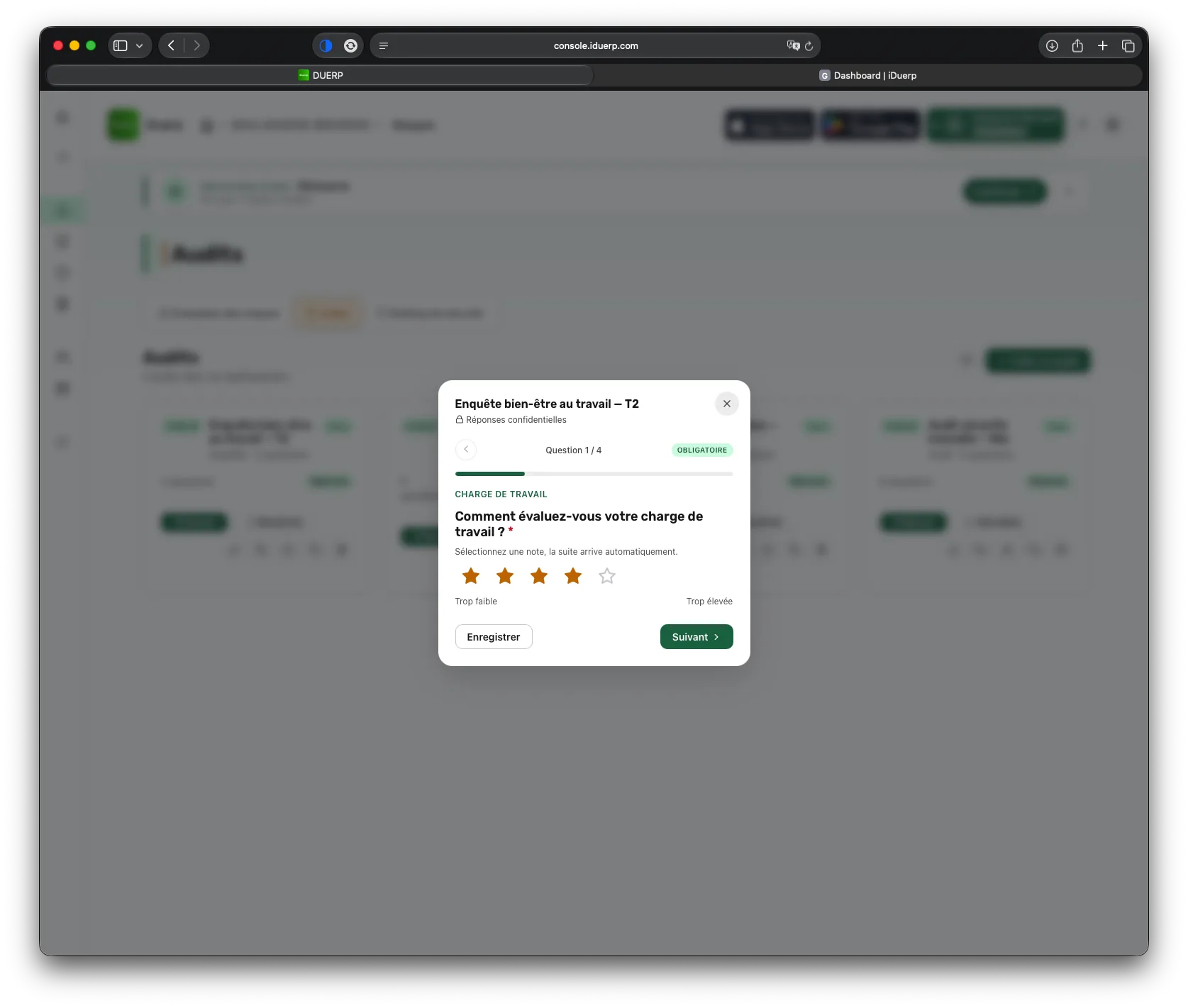 OSHAid console: the audits list, where a warehouse self-inspection against the hazards the emphasis program names is planned, run and closed out
The visit is random; the file does not have to be
Nothing in this program lets you predict the date. ListGen draws a random number and the area office works its cycle. What the directive does tell you, in detail, is the order in which your site will be read: the code, the headcount, four years of logs, then the aisles, the racks, the exits and the trucks.
That is an unusually generous warning: every item on it is something you can check yourself this week, in the same order, writing down what you found.
An establishment that can hand over its logs, its truck operator evaluations and its last self-inspection in one place has already answered most of the opening conference.
Questions safety officers ask
- What does OSHA's warehousing emphasis program cover?
CPL-03-00-026 covers seven NAICS codes: postal processing and distribution centers, couriers and express delivery, local messengers and local delivery, and general, refrigerated, farm product and other warehousing and storage. Inspections are comprehensive safety inspections focused on powered industrial vehicles, material handling and storage, walking-working surfaces, means of egress, heat, ergonomics and fire protection.
- How does OSHA choose which warehouses to inspect?
- Do warehouses have to send injury records to OSHA electronically?
Related reading
All posts- Nov 21, 2026Temporary worker safety training: who gives it, who proves itCase study
- Nov 19, 2026OSHA incident rate by industry: what the 2025 data showsData
- Nov 13, 2026OSHA whistleblower complaint: the hearing rules change on December 9Rule change
- Nov 11, 2026Respirator fit test requirements: the annual clock in 1910.134Fundamentals
About this article
Written by the OSHAid Safety Desk from official sources (OSHA news releases, the text of the standards, BLS and NIOSH data), checked against those sources and reviewed before publication. It explains what a rule says; it is not legal advice for your situation. OSHAid
Make the warehouse walkaround something you can show
Create a free OSHAid account: run the self-inspection, log what you found, assign the corrective actions and keep the injury records beside them — in one place your team can open. No commitment.
Try OSHAidFreeDownload on theApp StoreGET IT ONGoogle PlayThe intelligent OSHA companion that automates your field compliance. Mobile app + web console + specialized safety AI agent, built for US workplaces.
ProductIndustriesGuides- OSHA compliance software
- Hazard assessment guide
- Safety program templates
- JHA examples
- OSHA requirements
- OSHA recordkeeping
- OSHA standards by industry
- Workplace hazards
- Get started
- What is OSHA?
- Workplace safety glossary
- Why OSHAid?
- Enterprise solutions
- About
- Blog
- Legal notice
© 2026 OSHAid - published by DUOPP (SAS). All rights reserved.
Help us improve OSHAid
We only measure site traffic. No advertising, no resale of data.
OKDeclineLearn more