


Bakery & Pastry
OSHAid is the mobile app that simplifies hazard assessments for bakers & pastry chefs.
Pre-loaded with the risks specific to your trade (oven burns, handling flour bags, mixer use, display case maintenance, and customer interaction in the shop), the app guides you step by step to identify, evaluate, and prevent everyday hazards.
Result: an always-up-to-date hazard assessment, less paperwork, and audit-ready compliance.


Beta version
Free download

OSHAid
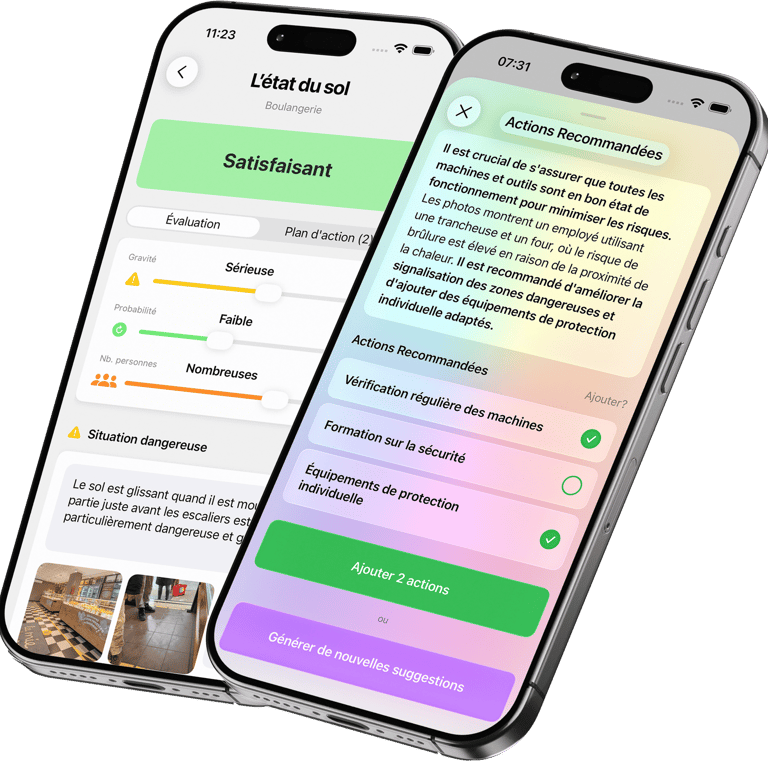
Built for your trade
OSHAid for Bakery & Pastry is built on proven industry expertise. The app comes pre-loaded with the main risks specific to your trade and the recommended prevention measures.
You can always add your own risks and adjust them in real time directly from your phone.
With its step-by-step guidance, OSHAid helps you assess, prioritize, and document risks quickly — significantly reducing the exposure of your teams and customers.
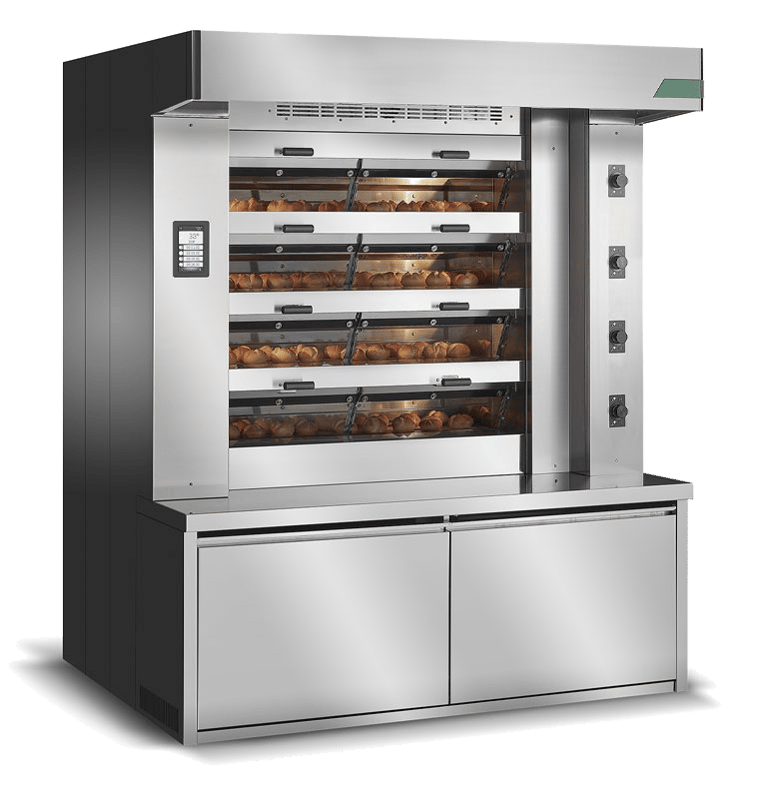
Document & equipment management
OSHAid lets you import the list of your most-used equipment. Each equipment record details the associated risks, safety guidelines, and best practices to protect your employees when operating the machines.
All types of documents can be updated remotely: you always have the latest recommendations on hand, plus manufacturer contact details for maintenance and support.
Tailored to your trade
Updates pushed to all users at the same time
Accessible anywhere, anytime, from your phone
Customizable and interactive: add your own equipment or adapt the guidelines to your real-world operations.
The outcome: better information and more safety.


Tap into community experience
OSHAid draws on the collective experience of all its users to continuously enrich and update its recommendations.
Each update strengthens the safety of every baker and pastry chef. Lean on the community's strength to anticipate risks and reduce your exposure for the long haul.
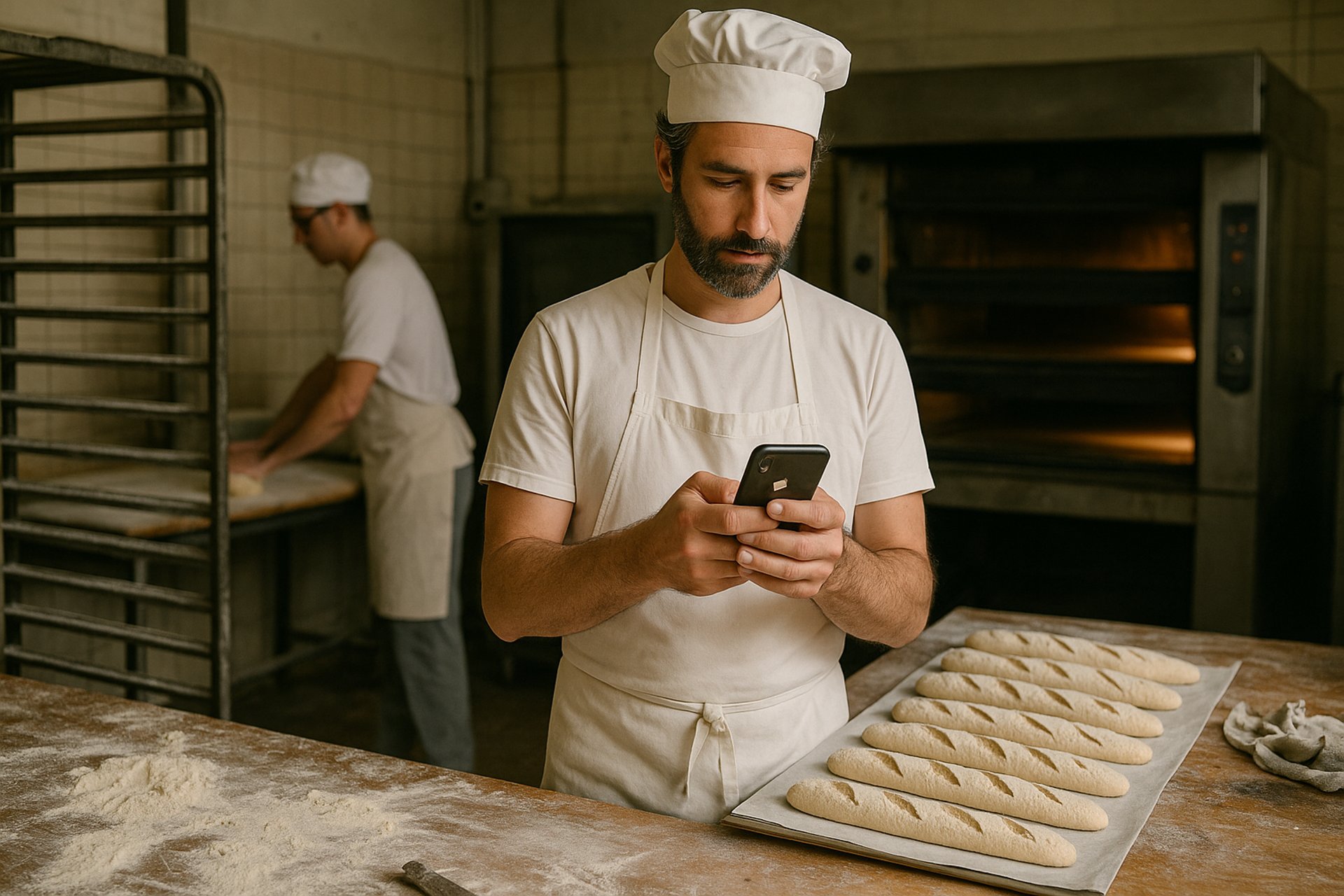
Testimonial
"Before OSHAid, I had to keep a binder full of documents for my hazard assessment, with complicated tracking that was often behind. Since I adopted the app, everything is centralized and much clearer. The records are already pre-loaded with the equipment we use in the bakery — mixer, oven, slicer — along with the associated risks and safety guidelines. I can easily add my own observations, take photos, and update everything in real time from my phone.
The other big advantage is that the app updates automatically with new recommendations and manufacturer contact details for maintenance. That way, I'm not only always in compliance, but I can also prevent accidents by keeping my employees better informed.
Today, I save time, I reduce my risks, and I'm relaxed during inspections. OSHAid gives me genuine peace of mind and feels like having a safety expert in my pocket."
— Jean-Marc, artisan baker in Lyon


OSHA Compliance for Bakery & Pastry: Obligations, Workplace Risks, and Prevention
What is the OSHA workplace hazard assessment for a bakery or pastry shop?
It is the written workplace risk assessment that covers production, baking, preparation, sales, cleaning, delivery, and work organization in a bakery, pastry shop, or production lab. It helps you identify, evaluate, and prioritize the risks employees may face in the workshop, retail floor, storage, or while traveling for work. In bakery and pastry, the assessment turns field observations into concrete prevention actions to better protect teams, secure operations, and improve daily organization.
Is a hazard assessment required for bakeries and pastry shops?
Yes. The assessment is required for any bakery or pastry shop as soon as the first employee is hired. This applies to artisan bakeries, pastry shops, combined bakery-pastry operations, production labs, on-site bakeries with retail, specialty stores, and businesses with delivery. Even a small artisan bakery must have an up-to-date document once it employs at least one person.
Does a baker or pastry chef with just one employee need a hazard assessment?
Yes. As soon as a baker or pastry chef hires at least one employee, the assessment becomes mandatory. This applies, for example, to apprentices, sales staff, dough makers, pastry chefs, bakers, lab assistants, multi-skilled employees, and delivery drivers. A small headcount does not remove the obligation.
Why is the hazard assessment essential in bakery and pastry?
In bakery and pastry trades, risk situations are numerous: heat, burns, cuts, slips, manual handling, repetitive motions, night shifts, demanding pace, heavy loads, cleaning chemicals, and fatigue. The assessment is essential because it helps the business structure its prevention efforts, reduce accidents, improve working conditions, and meet the employer's regulatory obligations.
What are the main risks to include in a bakery and pastry assessment?
The assessment should generally cover the most common risks in the sector: oven burns, cuts from knives or slicers, slips, falls, handling flour bags, lifting heavy loads, awkward postures, repetitive motions, use of mixers, sheeters, or other machines, electrical risks, heat, airborne flour, cleaning chemicals, fatigue, night shifts, and stress during peak periods. The document should reflect the risks actually encountered at the location.
What bakery-specific risks should the assessment cover?
For a bakery, the assessment must often include risks specific to baking: managing ovens, kneading, handling raw materials, flour bags, dusty or wet floors, production machines, fast work pace, night shifts, lab movement, and heat-related risks. The evaluation must be tailored to the bakery's actual operations.
What pastry-specific risks should the assessment cover?
For a pastry shop, the assessment must often include risks specific to pastry work: cuts, burns, handling small equipment and tools, fine and repetitive motions, lifting loads, prolonged postures, lab movement, cold storage, cleaning chemicals, seasonal peaks, and production pressure. The evaluation must be tailored to the lab's actual conditions.
Which bakery and pastry roles are covered by the assessment?
All bakery and pastry roles are covered as soon as there is at least one employee. This includes bakers, pastry chefs, dough makers, viennoiserie specialists, salespeople, prep staff, apprentices, production assistants, shop managers, delivery drivers, multi-skilled employees, and cleaning or packaging teams.
Which work areas should a bakery and pastry assessment cover?
The assessment must cover the actual work units of the business. This may include bakery production, pastry production, dough rolling, baking, packaging, retail sales, the cash register, storage, delivery, cleaning, supervision, and administrative tasks. The goal is a document that accurately reflects how operations are organized.
How do you create a hazard assessment for a bakery or pastry shop?
Start by identifying work units, spotting hazards, analyzing exposure situations, evaluating risks, and then defining concrete prevention actions. In this sector, it's important to start from real-world conditions: production type, lab organization, machines used, work pace, hours, storage, traffic between stations, retail sales, and cleaning. A good assessment must be practical, clear, and tailored to actual operations.
When should you update a bakery and pastry assessment?
The assessment must be updated whenever a significant change affects working conditions or risks. This may include the arrival of new equipment, new recipes that require different organization, a lab change, new schedules, an accident, a near-miss, a surge in activity, or a change in production methods. It must remain consistent with field reality.
What documents or information should you use to prepare the assessment?
It's useful to draw on field observations, work stations, past incidents, near-misses, machines used, safety data sheets for cleaning products, internal procedures, schedule constraints, traffic flow, and conversations with the team. The more it starts from reality, the more useful it becomes for prevention.
Is there an example bakery or pastry assessment?
Yes, examples exist, but they must always be tailored to the actual operation. A good example should not be a simple generic template. It must account for production type, team size, machines, schedules, work stations, and concrete risk-exposure situations.
What's the difference between a generic assessment and a bakery- and pastry-specific one?
A generic assessment often stays too theoretical. A tailored one accounts for field reality: heat, ovens, flour, manual handling, night shifts, work pace, lab, retail floor, slips, cuts, fatigue, and seasonal activity. In this sector, an overly generic document quickly loses its operational value.
Can the assessment help improve safety in a bakery or pastry shop?
Yes. When properly built, it isn't just a way to meet a regulatory obligation. It becomes a concrete tool for steering prevention, prioritizing actions, reducing accidents, improving working conditions, raising team awareness, and strengthening safety on site.
What are the most common workplace risks for bakers and pastry chefs?
The most common risks are burns, cuts, slips, falls, manual handling, lifting, musculoskeletal disorders, heat, repetitive motions, fatigue, night shifts, machine-related risks, and exposure to cleaning products. An effective assessment should help spot these exposures so adapted prevention measures can be put in place.
Should the assessment differ by activity: artisan bakery, pastry shop, viennoiserie, or shop with lab?
Yes. It must be tailored to each activity. An artisan bakery isn't exposed to exactly the same risks as a pastry shop, viennoiserie, central lab, or shop with on-site production. Equipment, motions, schedules, production constraints, traffic, and handled products vary. A relevant assessment must therefore be customized to the establishment's actual activity.
Should the assessment include the lab, shop floor, storage, and delivery?
Yes. In bakery and pastry, the assessment must integrate all real work situations, including the lab, baking, storage, retail floor, cash register, cleaning, delivery, early-morning or nighttime openings, and internal movement. The risk evaluation must not be limited to the production workshop alone.
Simple, fast, and effective
Try OSHAid for free, no commitment.


Solutions for large organizations
Beta version

Free download