


Transport
OSHAid is the mobile app that simplifies hazard assessments for the transportation industry.
Pre-loaded with the hazards specific to transportation trades (traffic and collision risk, fatigue and alertness, manual handling and musculoskeletal disorders, slips and falls when climbing in/out of the vehicle, load securing and tipping, dock work and shared activity with equipment, lift gates and pallet jacks, exposure to weather and cold, mechanical hazards during inspection/maintenance, chemical hazards depending on freight, and aggression/incivility) — OSHAid guides you step by step to identify, evaluate, and prevent everyday hazards.
The result: an always-up-to-date hazard assessment, less paperwork, and OSHA-ready compliance for any inspection or audit.


Version bêta
download gratuite

OSHAid
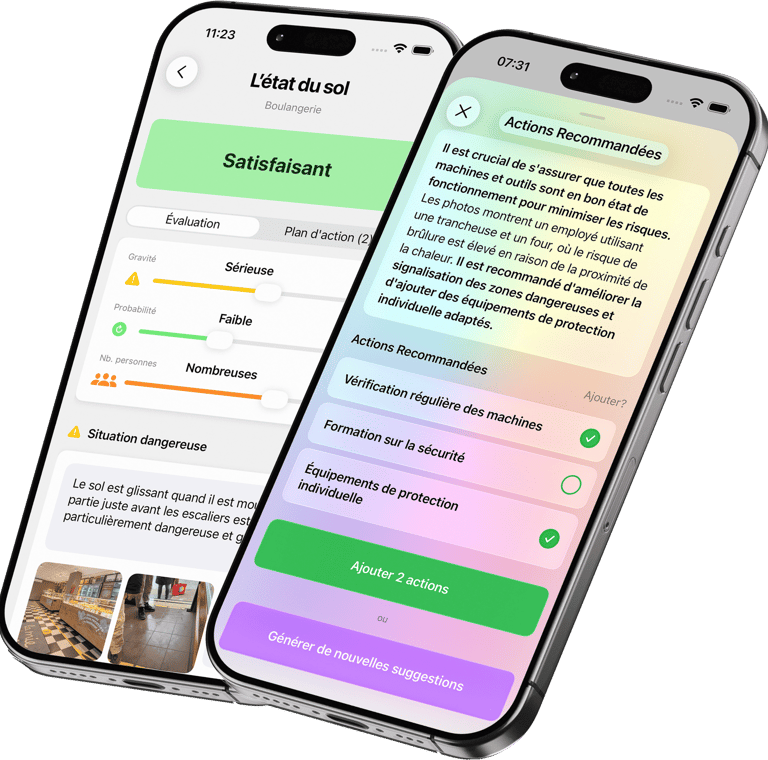
Built for transportation
OSHAid for transportation draws on proven sector expertise. The app comes pre-loaded with the principal hazards specific to your activity — traffic risk (collisions, maneuvers, blind spots), fatigue and alertness, manual handling and musculoskeletal disorders, load securing and falling loads, slips when climbing in/out of the vehicle, dock work and shared activity with equipment, lift gates and pallet jacks, exposure to weather and cold, mechanical hazards during inspection and maintenance — along with recommended prevention measures.
You can extend this content anytime by adding your own hazards and adjusting them in real time directly from your phone (route type, schedules, freight, customer sites, subcontractors).
Thanks to its step-by-step guidance, OSHAid helps you evaluate, prioritize, and document hazards quickly, while significantly reducing exposure for your drivers, dock workers, and contractors — on the road and at logistics yards alike.
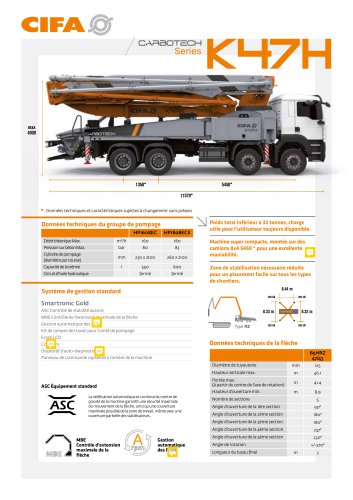
Pre-loaded equipment list
OSHAid lets you add your most-used equipment to one centralized list. Each product card details the associated hazards, safety guidelines, and best practices to protect you and your employees when operating the equipment.
All documentation can be updated remotely: you always have the latest recommendations on hand, along with manufacturer contacts for maintenance and support.
• Tailored to your operation
• Real-time updates for every user, simultaneously
• Accessible anywhere, anytime, from your mobile device
• Customizable and interactive: add your own equipment or adapt the guidelines to match your day-to-day reality
The result: better information and stronger safety.


Benefit from the community's experience
OSHAid draws on the collective experience of all its users to continuously enrich and update its recommendations. Every update strengthens safety for everyone on the platform.
Lean on the community's strength to anticipate hazards and durably reduce your team's exposure on the road and in the yard.

Customer story
OSHAid is a perfect fit for the day-to-day reality of a captain. In just a few minutes, I can structure our reality on board: critical zones (gangway, deck, hold, engine room), recurring operations (mooring maneuvers, cargo, rounds, maintenance), and essential equipment (winches, cranes, gear, PPE, lockout/tagout). Each record is direct: hazards, guidelines, watch-points, and concrete actions to verify before and during the operation. Result: the crew stays aligned even when the weather turns or the pace picks up, and we avoid the oversights that can lead to incidents (falls, crush injuries, slips, exposure to substances, mechanical incidents).
What I appreciate most is the simple, centralized updates. Procedures evolve, so do guidelines, and OSHAid lets me adapt our practices quickly to the vessel, the cargo, the navigation area, or the customer's requirements — without losing time managing paper versions or scattered documents.
The bottom line: we gain rigor and traceability, the team is better informed, and prevention becomes second nature on board — with the peace of mind of being ready for an inspection, an audit, or a debrief after a risk situation.
— Antoine Le Guen, Captain (maritime transport)


Transportation Hazard Assessment FAQ: obligations, occupational hazards, and prevention
What does OSHA require from transportation and logistics employers?
In the U.S., transportation and logistics employers fall under the OSHA General Duty Clause (Section 5(a)(1) of the OSH Act of 1970), 29 CFR 1910 (general industry standards), and — for road operations — the Federal Motor Carrier Safety Regulations (FMCSRs, 49 CFR Parts 350-399) enforced by FMCSA. Employers must assess hazards across driving, loading, dock, and yard operations, train workers, supply PPE, secure loads, and keep recordable injuries on OSHA Forms 300/300A/301.
Does OSHA apply to small carriers and delivery companies?
Yes. Almost every private-sector transportation employer with at least one employee is OSHA-covered. A single-truck carrier, a local delivery LLC, or a one-route messenger service has the same baseline duty as a national fleet. Small employers (10 or fewer employees) get partial relief on routine recordkeeping but still owe training, PPE, hazard control, and reporting of fatalities and severe injuries.
Does a one-driver operation need a written safety program?
If the driver is an employee — and not a true independent contractor — yes. As soon as one employee is on payroll (driver, helper, dock worker, dispatcher, mechanic), the company is OSHA-covered and must run the written programs that apply to its work (HazCom, PPE, Lockout/Tagout if maintaining vehicles, Hours of Service for DOT-regulated drivers, etc.).
Why is hazard assessment so important in transportation?
Motor-vehicle crashes are the leading cause of work-related fatalities in the U.S. Add fatigue, irregular hours, manual handling, dock collisions, lift-gate injuries, and driving-while-loading exposures, and the risk profile is one of the highest in any sector. A documented Job Hazard Analysis (JHA) helps the employer plan routes, secure loads, set hours, choose PPE, and train drivers and dock workers for the conditions they will actually face.
What are the main OSHA hazards in transportation?
A transportation safety program should generally cover collision risk, distracted and fatigued driving, slips and falls climbing in/out of the cab and trailer, struck-by from forklifts and yard traffic, manual handling and ergonomic strain, falls from lift gates and dock plates, load-shift and tip-over, hours-of-service compliance, exposure to weather (heat illness/cold), noise, vibration, hazardous materials (49 CFR HM regulations), and workplace violence on routes.
What hazards must a long-haul or OTR driver program address?
Long-haul programs should address Hours of Service (49 CFR Part 395), fatigue and sleep apnea screening, distracted driving (49 CFR 392.80/392.82), securing cargo (49 CFR Part 393 Subpart I), pre/post-trip inspections, slips climbing in/out of the cab and trailer, manual handling at delivery, exposure to weather, work alone, and incident response after a crash.
What dock and warehouse hazards must a logistics program cover?
Dock and warehouse programs need to address powered industrial trucks (29 CFR 1910.178 — forklifts), pedestrian/forklift separation, dock-edge falls, dock plate/leveler safety, trailer creep and unchocked trailers, lift-gate use, falling loads, palletizing ergonomics, cold storage exposure, and HazCom for any chemicals handled.
Which transportation roles does OSHA cover?
All roles with at least one employee are covered: long-haul and local truck drivers, last-mile delivery drivers, bus and motorcoach operators, van and utility-vehicle drivers, dock workers, forklift operators, warehouse and pick/pack staff, dispatchers, fleet maintenance technicians, terminal managers, and movers.
Which job functions should the OSHA hazard assessment cover?
Cover every "unit of work" the operation performs: driving, route planning, loading/unloading, cargo securement, dock operations, yard moves, vehicle inspection and maintenance, fueling, on-site delivery work, walk-around at customer sites, dispatch and admin, and any high-risk supporting tasks like fueling at remote locations or operating in active traffic.
How do you build an OSHA-compliant safety program for a transportation company?
Start by mapping the work units (driving, dock, yard, maintenance, dispatch), identify hazards in each, and analyze actual exposures. Apply the Hierarchy of Controls. Write the programs OSHA and FMCSA require for your work (HazCom, PPE, Forklift, Hours of Service, HM, etc.), train your people, and document everything. A solid program is practical, role-specific, and built from real route, dock, and yard conditions.
When do you need to update a transportation safety program?
Update it any time the work or its hazards change — a new lane or route, a new vehicle class, a new piece of equipment, a new commodity (especially HazMat), a new dock or customer site, a crash, a near-miss, or a CSA score change. OSHA and FMCSA both expect living programs that match real operations.
What documents and inputs help build a transportation safety program?
Useful inputs include OSHA Forms 300/300A/301, DOT recordable injury logs, FMCSA crash reports and CSA scores, vehicle inspection records (DVIRs), driver qualification files, training records, route plans, dispatch logs, near-miss reports, SDS for any HazMat handled, and direct conversations with drivers and dock workers.
Is there an OSHA template for trucking, delivery, or warehouse operations?
Yes. OSHA publishes free model programs, eTools, and small-business resources at osha.gov, and the OSHA On-Site Consultation Program will help small carriers and 3PLs build a compliant program at no cost. FMCSA also offers free safety planning tools at fmcsa.dot.gov. Templates are starting points — the program must be tailored to your routes, vehicles, freight, and customers to be useful.
What's the difference between a generic safety program and one built for transportation?
A generic program tends to ignore the realities of the road and the dock: long hours, irregular schedules, solo work, weather, traffic, dock co-activity, lift-gate use, and customer-site constraints. A transportation-specific program names actual tasks (delivery routes, OTR runs, dock receiving, yard moves) and the controls that go with them.
Can an OSHA program actually reduce crashes and injuries in a fleet?
Yes. OSHA and FMCSA data both show that carriers with active safety programs see lower crash rates, fewer recordable injuries, lower workers' comp premiums, and better CSA scores. A program that's used — not just filed — changes daily behavior and keeps drivers and dock workers safer.
What are the most common OSHA-recordable injuries in transportation?
The most common are motor-vehicle crashes, slips and falls climbing in/out of the cab and trailer, struck-by from forklifts in yards, falls from lift gates, manual handling and lifting strains, struck-by falling cargo, dock-edge falls, exposure to weather (heat illness, hypothermia, frostbite), and assaults during deliveries.
Does the safety program need to look different for OTR, last-mile, bus, or moving operations?
Yes. The hazards differ. OTR drivers face long-haul fatigue and HOS exposure. Last-mile drivers face curb traffic and customer-site hazards. Bus and motorcoach operators face passenger management and urban traffic. Movers face heavy manual handling and stair work. Each operation needs its own JHAs and training.
Does the program need to cover the full chain — driving, dock, yard, and customer sites?
Yes. OSHA and FMCSA expect the program to cover everything from pre-trip inspection through delivery and post-trip. That includes route exposures, dock and yard hazards, lift-gate operation, customer-site constraints, fueling, and any work performed away from the home terminal. Limiting the assessment to driving alone misses where most recordable injuries actually happen.
Simple, fast, and effective
Try OSHAid for free, no commitment.


Solutions for large organizations
Beta version

Free download