


Services
OSHAid is the mobile app that simplifies hazard assessments for the services industry.
Pre-loaded with the hazards specific to service trades (electricians, plumbers, maintenance technicians) — falls from heights (stepladders, ladders), electrical hazards, cuts and punctures, manual handling and musculoskeletal disorders, work in confined spaces (basements, ducts, drop ceilings), exposure to dust and fibers, tool noise and vibration, chemical hazards (solvents, adhesives, descalers), burns (welding, hot water), traffic and travel, and shared activity at customer sites and worksites — OSHAid guides you step by step to identify, evaluate, and prevent everyday hazards.
The result: an always-up-to-date hazard assessment, less paperwork, and OSHA-ready compliance for any inspection or audit.


Version bêta
download gratuite

OSHAid
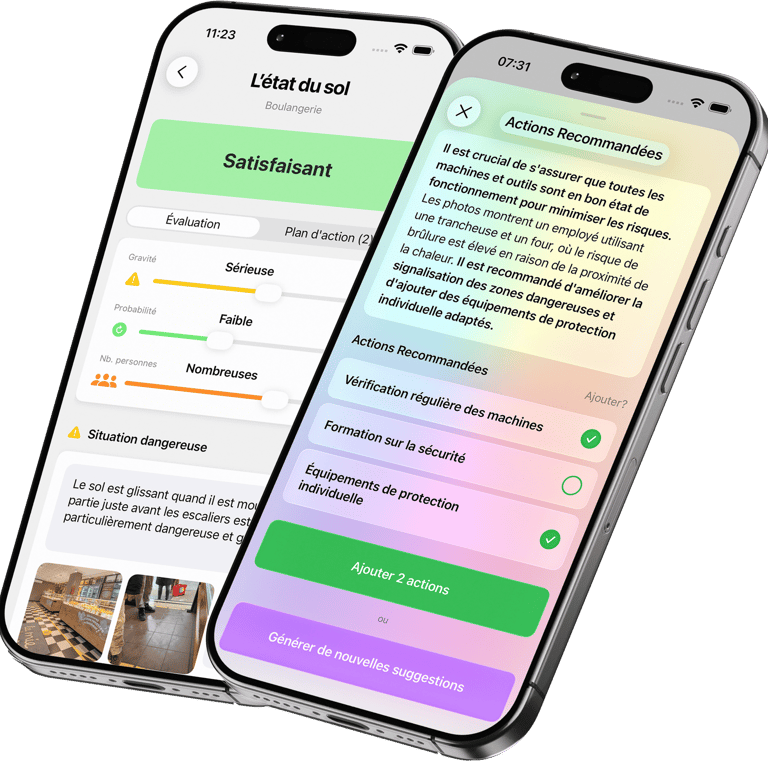
Built for service trades
OSHAid for service trades draws on proven sector expertise. The app comes pre-loaded with the principal hazards specific to your activity (for example electrical hazards, exposure to dust and fibers, tool noise and vibration, chemical hazards (solvents, adhesives, descalers), burns (welding, hot water), and traffic/travel) along with recommended prevention measures.
You can extend this content anytime by adding your own hazards and updating them in real time directly from your phone.
Thanks to its step-by-step guidance, OSHAid helps you evaluate, prioritize, and document hazards quickly, while significantly reducing exposure for your teams and the contractors working at your sites.
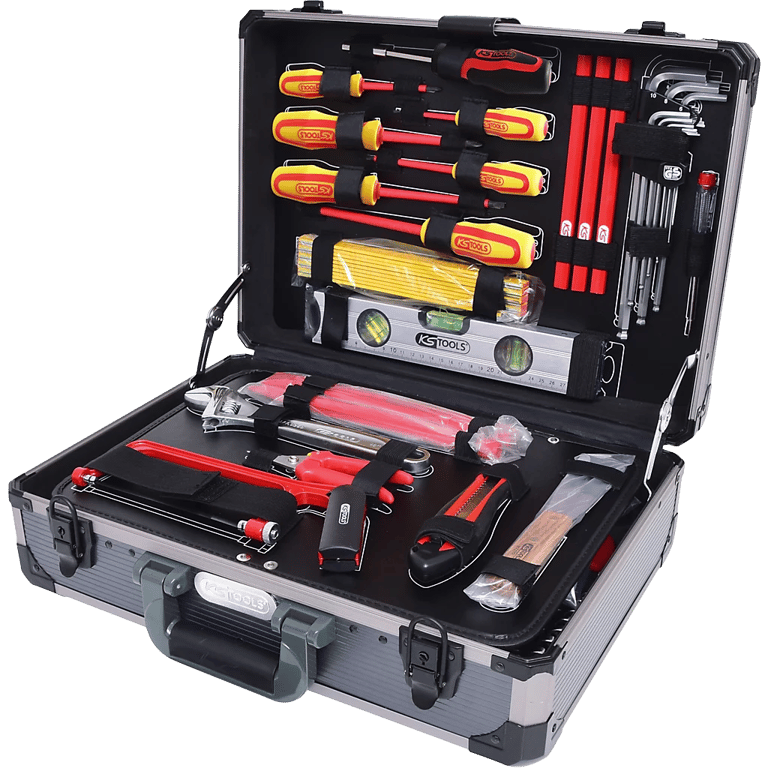
Pre-loaded equipment list
OSHAid lets you add your most-used equipment to one centralized list. Each product card details the associated hazards, safety guidelines, and best practices to protect you and your employees when operating the equipment.
All documentation can be updated remotely: you always have the latest recommendations on hand, along with manufacturer contacts for maintenance and support.
• Tailored to your trade
• Real-time updates for every user, simultaneously
• Accessible anywhere, anytime, from your mobile device
• Customizable and interactive: add your own equipment or adapt the guidelines to match your day-to-day reality
The result: better information and stronger safety.


Benefit from the community's experience
OSHAid draws on the collective experience of its entire user base to continuously enrich and update its recommendations. Every update strengthens safety for every user.
Tap into the strength of the community to anticipate hazards and durably reduce your exposure.

Customer story
OSHAid really matches the day-to-day reality of an electrician. In just a few minutes I can lay out the equipment we use and the situations we run into on calls (panels and switchboards, temporary site boxes, cable trays, ladders and stepladders, lifts, hammer drills, grinders, insulated tools, PPE, lockout/tagout procedures...). Everything is laid out in a simple way: the hazards, the things to watch for, the right techniques, and most of all the concrete actions to verify before starting. The result: even on the busiest days, we no longer skip the small details that can cost us dearly (shock/arc flash, falls, lacerations, multi-employer conflicts).
What really makes the difference is the centralized updates. Procedures change, jobsites change, equipment changes — OSHAid lets me adjust our practices quickly (new tools, new sites, work in occupied buildings, emergency calls) without rebuilding the whole program or chasing down different versions of files.
The end result: we save time, the crew is more autonomous, and prevention becomes a reflex on the job — with the peace of mind of being ready if an OSHA inspection or audit shows up.
— Joel Legrand, Electrician (Houston, TX)
OSHA FAQ for service trades (plumbers, electricians, HVAC, maintenance, repair...)
What does OSHA require from service trades like plumbers, electricians, and HVAC?
Under the OSH Act of 1970, every employer in the U.S. must provide a workplace free from recognized hazards. For service trades, that means following 29 CFR 1910 (general industry) and, when work happens on a construction project, 29 CFR 1926. Employers must assess the hazards of every job, train workers in a language they understand, supply proper PPE, and keep injury and illness records.
Does OSHA apply to small plumbing and electrical contractors?
Yes. OSHA covers nearly every private-sector employer with at least one employee. A small shop with one electrician or plumber on payroll is responsible for the same General Duty Clause obligations as a national contractor. Some recordkeeping rules (29 CFR 1904) are reduced for employers with 10 or fewer employees, but training, PPE, and hazard control rules still apply.
Does a sole proprietor with no employees need an OSHA program?
A true self-employed person with no employees is not covered by OSHA. Once you hire even one employee — including an apprentice, helper, or part-timer — you become an OSHA-covered employer and must run a written safety program for the standards that apply to your work.
Why is hazard assessment so important for service and maintenance work?
Service work happens in customer homes, occupied buildings, mechanical rooms, attics, and active job sites. Conditions change every visit. A documented Job Hazard Analysis (JHA) helps techs prepare for the next call: what energy sources need lockout/tagout, what fall protection is needed, who else is working in the area, and what PPE to bring.
What are the most common OSHA hazards on a services jobsite?
Electrical shock and arc flash, falls from ladders and roofs, struck-by from tools and falling objects, cuts and lacerations, burns, manual handling and ergonomic strain, confined-space entry, hazardous chemicals (solvents, adhesives, refrigerants), respirable dust and silica, noise above 85 dBA, motor-vehicle exposure while driving between jobs, and multi-employer worksite hazards.
What hazards should a plumber's safety program cover?
A plumber program should address confined spaces (29 CFR 1910.146), trenching and excavation (29 CFR 1926 Subpart P), exposure to wastewater and bloodborne pathogens (29 CFR 1910.1030), hot work and torch use (29 CFR 1910.252), chemical exposure (HazCom — 1910.1200), heavy lifting and awkward postures, slips on wet surfaces, and PPE for eye, hand, foot, and respiratory protection.
What hazards should an electrician's safety program cover?
Electrical work falls under 29 CFR 1910 Subpart S and NFPA 70E. The program must cover lockout/tagout (1910.147), arc-flash boundaries and PPE, qualified vs. unqualified worker rules, ladder and aerial-lift use, work in attics and crawl spaces, and coordination with other trades on multi-employer sites.
What other service trades does OSHA cover?
OSHA applies to HVAC and refrigeration techs, locksmiths, glaziers, carpenters and finish trades, low-voltage and security installers, appliance repair, elevator service, facilities-maintenance technicians, and any general handyman or multi-service company that has employees.
Which job functions should be included in your safety program?
Cover every "unit of work" your team performs: customer-site service calls, scheduled maintenance, emergency repairs, shop and warehouse work, parts handling, vehicle loading/unloading, driving between jobs, supervisor/lead tasks, and any office or dispatch role with workplace hazards (ergonomics, electrical, fire egress).
How do you build an OSHA-compliant safety program for a service business?
Start by listing every job task your team performs, then walk through each one and ask: what could hurt someone here? Document the hazard, rate severity and likelihood, and assign a control using the Hierarchy of Controls. Add written programs for any standard that applies (HazCom, Lockout/Tagout, Respiratory Protection, etc.), train your people, and review the program at least once a year.
When do you need to update your hazard assessment?
Update any time something material changes: a new tool or chemical, a new vehicle, a new type of service, a new customer environment, an injury, a near-miss, or a citation. OSHA expects living programs — if your assessment hasn't been touched in years, that's a red flag in an inspection.
What documents help you build a strong service-trade safety program?
Use Safety Data Sheets (SDS) for every chemical, manufacturer manuals for tools and equipment, OSHA eTools and consensus standards (ANSI, NFPA 70E, ASTM), past incident reports and near-miss logs, vehicle inspection records, and direct conversations with the techs doing the work.
Is there an OSHA template for plumbers, electricians, or maintenance shops?
OSHA publishes free sample programs and eTools at osha.gov, and the OSHA On-Site Consultation Program will help small employers build one at no cost. Templates are a starting point — the program must be tailored to your actual tools, sites, and crews to be compliant and useful.
What's the difference between a generic safety program and one built for service trades?
A generic plan often misses the realities of field service: changing job sites, working alone, customer access constraints, multi-employer coordination, driving exposure, and emergency calls. A trade-specific program names the actual tasks (residential service, panel changeouts, drain clearing, rooftop unit repair) and the controls that go with them.
Can a written safety program actually reduce accidents?
Yes. OSHA's own data shows that workplaces with active Safety and Health Programs see fewer injuries, lower workers' comp costs, and stronger productivity. A program that's used — not just filed — changes daily behavior and keeps people out of the ER.
What are the most common OSHA-recordable injuries in service trades?
Electrical shock and arc-flash burns, ladder falls, lacerations, sprains and strains from lifting, struck-by injuries, eye injuries from dust and debris, chemical burns, slip-trip-fall on wet or cluttered surfaces, vehicle crashes, and heat or cold stress for outdoor and rooftop work.
Should the safety program look different for plumbers vs. electricians vs. HVAC techs?
Yes. The hazards, standards, and PPE differ. Plumbers worry about confined spaces, wastewater, and torch work. Electricians focus on lockout/tagout and arc flash. HVAC techs deal with refrigerants (EPA Section 608), rooftop falls, and rigging. Each trade needs its own JHAs and training even if they share a common written program.
Does your safety program need to cover driving and customer-site work?
Yes. Driving between jobs is one of the leading causes of work-related fatalities. Your program should address vehicle inspection, distracted-driving rules, fatigue, securing tools and ladders, and what to do when arriving at an unfamiliar customer site — including how to coordinate with general contractors under the OSHA Multi-Employer Citation Policy.
Simple, fast, and effective
Try OSHAid for free, no commitment.


Solutions for large organizations
Beta version

Free download