


Food Service
OSHAid is the mobile app that simplifies hazard assessments for the food service industry.
Pre-loaded with the risks specific to your trade (slips and falls, cuts and injuries from knives/mandolines, burns and oil splashes, heat from ovens/griddles/fryers, etc.), OSHAid guides you step by step to identify, evaluate, and prevent everyday hazards.
Result: an always-up-to-date hazard assessment, less paperwork, and audit-ready compliance.


Free download
Beta version


OSHAid
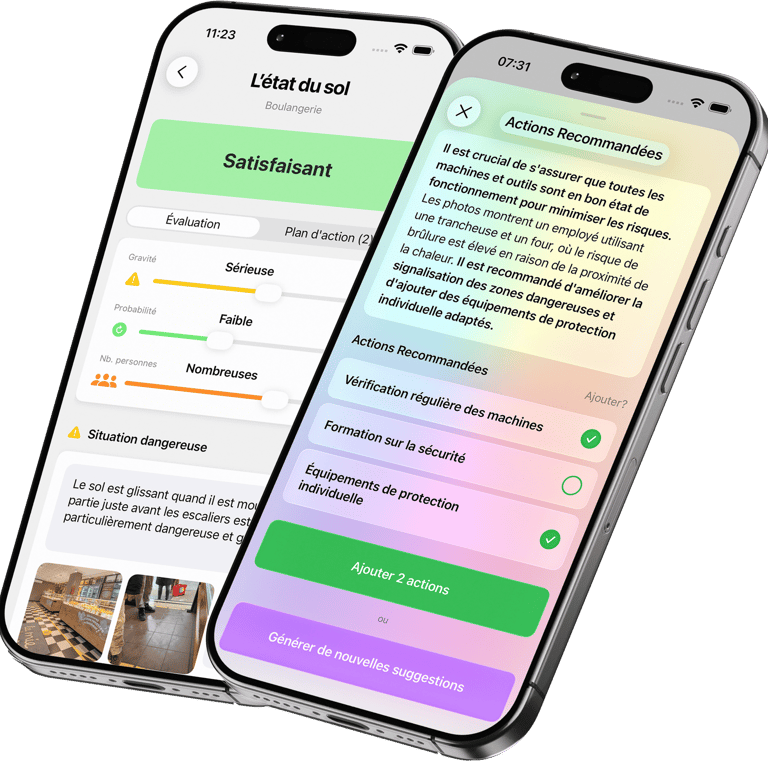
Built for food service
OSHAid for food service is built on proven sector expertise. The app comes pre-loaded with the main hazards specific to your operation (such as slips on wet floors, knife and slicer cuts, burns from fryers and ovens, hot oil splashes, electrical hazards, cold storage exposure, allergen handling, and kitchen co-activity) along with recommended prevention measures aligned with OSHA standards.
You can complete this information at any time by adding your own hazards and adjusting them in real time directly from your mobile device.
Thanks to its step-by-step guidance, OSHAid helps you assess, prioritize, and document hazards quickly, while significantly reducing exposure for your teams and the contractors working in your kitchens.
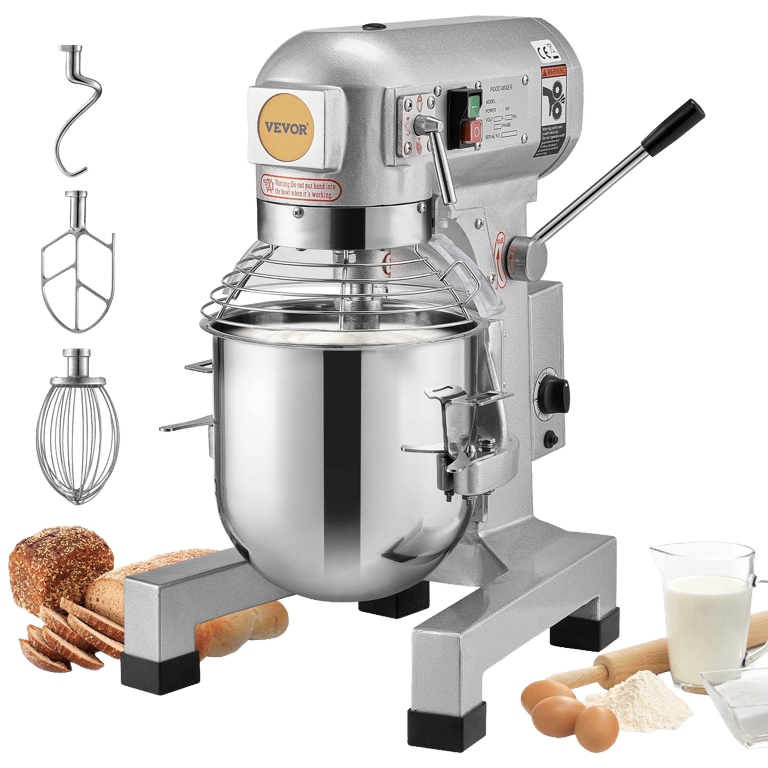
Pre-loaded equipment library
OSHAid lets you import the list of your most-used equipment. Each record details the associated hazards, safety guidelines, and best practices to protect your employees when operating the machines.
All types of documents can be updated remotely: you always have the latest recommendations on hand, plus manufacturer contact details for maintenance and support.
Tailored to your trade
Updates pushed to all users at the same time
Accessible anywhere, anytime, from your mobile device
Customizable and interactive: you can add your own equipment or adapt the guidelines to your on-site reality.
The result: better information and safer operations.


Tap into community experience
OSHAid draws on the collective experience of all its users to continuously enrich and update its recommendations. Every update strengthens safety for everyone on the platform. Lean on the community's strength to anticipate hazards and durably reduce your team's exposure.

Testimonial
OSHAid is built for the day-to-day reality of a restaurant operator. In just a few minutes, I can load in the equipment and zones that actually matter to us (fryer, oven, slicer, flat-top griddle, walk-in cooler, dish station, cleaning chemicals…). Each record is clear: hazards, guidelines, best practices, and most importantly the simple actions to put in place. The result: the team has the right reflexes, even in the middle of service, and we avoid the small oversights that sometimes end in incidents.
The real win: everything updates remotely. I always have the latest recommendations on hand, and I can adapt our guidelines to fit our setup (new menu item, new machine, kitchen reorganization) without starting from scratch or chasing binders.
Bottom line: we save time, the team is better informed, and prevention becomes a natural part of daily operations — with real peace of mind if an OSHA inspection comes.
— Sebastian Martin, Restaurant Owner (Chicago)


Food Service OSHA FAQ
1. What is OSHA compliance for food service?
OSHA compliance for food service means meeting the U.S. Occupational Safety and Health Administration's standards in restaurants, kitchens, bars, food trucks, and food processing operations. It covers hazard identification, employee training, recordkeeping, and the General Duty Clause obligation to keep the workplace free of recognized hazards.
2. Is OSHA compliance mandatory for restaurants?
Yes. OSHA applies to virtually every private-sector employer in the U.S., including restaurants, cafes, bars, fast-food, catering, food trucks, and institutional food service. Even a single-location operation must meet the General Duty Clause and applicable OSHA standards.
3. Does OSHA apply with only one employee?
Yes. As soon as a food service operator hires a single employee — a cook, server, dishwasher, barista, line cook, or runner — OSHA obligations apply. Some recordkeeping requirements (Form 300/301/300A) are reduced for businesses with fewer than 10 employees, but the duty to provide a safe workplace remains.
4. Why is OSHA compliance essential in food service?
Food service is a high-incident industry: slippery floors, knife and slicer cuts, burns, manual handling, heat stress, cleaning chemicals, late-night shifts, and high service pace. OSHA compliance helps structure prevention, reduce accidents, improve working conditions, and protect operators from costly citations.
5. What are the main hazards to address in a food service workplace?
A food service safety program should typically cover cuts, burns, slips and falls, manual handling, awkward postures, heat and steam exposure, electrical hazards, cleaning chemicals, repetitive motion, fatigue, stress, noise, and work-organization risks.
6. What food-service-specific hazards must be addressed?
In a restaurant, the program should cover knife and slicer use, work near ovens, ranges, fryers, and hot surfaces, fast movement in the kitchen and dining room, wet or greasy floors, carrying heavy trays or stock, cleaning chemicals, dishpit hazards, walk-in cooler exposure, and service-rush peaks.
7. Which food service roles are covered by OSHA?
All food service roles are covered as soon as there is at least one employee. This includes cooks, chefs, line cooks, dishwashers, servers, bartenders, runners, hosts, delivery drivers, managers, multi-skilled staff, fast-food crews, caterers, and institutional food service teams.
8. What OSHA recordkeeping is required for food service?
Most food service operations with more than 10 employees must maintain OSHA Form 300 (Log of Work-Related Injuries and Illnesses), Form 301 (Incident Report), and Form 300A (Annual Summary, posted Feb 1 to Apr 30). Fatalities must be reported within 8 hours; hospitalizations, amputations, or eye loss within 24 hours.
9. How do I conduct a food service hazard assessment?
Start by identifying work zones (hot kitchen, prep, pastry, dish station, service floor, bar, storage, deliveries). Walk each zone, observe tasks, talk to staff, and document hazards. Evaluate likelihood and severity, then define concrete prevention actions: training, PPE, signage, equipment guards, scheduling adjustments.
10. When should I update the safety program?
Update whenever something material changes the work or its hazards: a new menu, a new piece of equipment, a renovation, a near-miss, an incident, a change in shifts, or a change in flow. The program should always reflect what's actually happening on the floor.
11. What documents and information should I gather?
Useful inputs include past incident and near-miss records, OSHA logs (300/301/300A), Safety Data Sheets for cleaning chemicals, equipment manuals, training records, internal procedures, scheduling, and feedback from staff. The closer the program is to reality, the more useful it becomes for prevention.
12. Are there OSHA templates for food service?
OSHA publishes recommended practices and forms (300/301/300A), but each operation should adapt its program to its actual setup. A generic template won't reflect the specific equipment, layout, staffing, and service pace of your restaurant — those details are what make the program operationally useful.
13. How is a food-service-adapted program different from a generic one?
A generic program tends to be theoretical. A food-service-adapted program reflects the realities of the floor: heat, cuts, slips, service tempo, manual handling, cleaning, storage, kitchen and dining-room co-activity, late-night shifts, and fatigue. In food service, an overly general document quickly loses operational value.
14. Can OSHA compliance actually improve safety in a restaurant?
Yes. When the program is built well, it stops being just a regulatory obligation. It becomes a concrete tool to drive prevention, prioritize action items, train teams, reduce accidents, improve organization, and strengthen safety culture across the establishment.
Simple, fast, and effective
Try OSHAid for free, no commitment.


Solutions for large organizations
Beta version

Free download